
C&P exam tips for back pain start with a clear account of your symptoms: when flare-ups happen, how long they last, what they prevent you from doing, and where pain or numbness travels. During the exam, the examiner measures spinal movement and notes when pain begins. Leg weakness, changes in sensation, and other nerve symptoms may also matter because associated neurological conditions can be evaluated separately.
It’s understandable to worry that a short appointment or a better-than-usual day won’t show the full picture. A concise summary of your difficult days, daily limitations, treatment, and nerve symptoms can help you explain how your back condition affects you. This article covers how to describe flare-ups, what range-of-motion testing involves, how radiculopathy or sciatica can affect VA ratings, and the role of the exam and your medical records.
Key Takeaways
- Describe flare-ups with practical detail: what triggers them, how long they last, and how they change your ability to move or manage daily tasks.
- During range-of-motion testing, explain when pain begins and don’t force movement beyond what you can safely do.
- Report symptoms such as leg pain, numbness, weakness, or altered sensation, since related neurological abnormalities may be evaluated separately.
- According to the Electronic Code of Federal Regulations, unfavorable ankylosis of the entire thoracolumbar spine corresponds to a 50% rating.
- Bring relevant private treatment records and understand how the exam findings and records may inform a VA decision or an appeal.
How do you explain flare-ups and daily limitations?
Describe how your back condition affects you on ordinary days and during flare-ups, using specific activities and symptoms. The examiner considers pain, motion, and functional loss along with the medical evidence in your claim.
Does a VA back pain C&P exam cost anything? If VA arranges the C&P exam for your claim, you aren’t charged for the examination.
What questions does the examiner ask about back pain and flare-ups? Expect questions about when pain occurs, how often flare-ups happen, how long they last, what triggers them, and how they affect movement and daily activities. The examiner may also ask what you can do on a typical day compared with a difficult one.
Describing Flare-Ups and Their Effects
A flare-up is a period when back symptoms worsen and make movement or daily tasks harder. Explain how often it happens, how long it lasts, what triggers it, and how it affects you, so the examiner understands more than how you feel during the appointment.
Give a concrete example instead of saying only that your pain is severe. You might describe needing help to put on shoes, stopping while preparing a meal, or being unable to sit through a planned activity. Keep the example accurate and explain what changed: pain, stiffness, reduced motion, or the need to rest.
VA back evaluations document flare-up effects, including triggers and duration. Examiners must ask about frequency, duration, and estimated additional range-of-motion loss during a flare-up. If you can’t estimate degrees, explain the functional change you experience rather than guessing. Sharp v. Shulkin requires examiners to account for flare-ups and difficult days when you describe them.
A short written summary can help you organize these details before the exam. Note a representative difficult day, what brought symptoms on, how long the flare lasted, and which tasks became difficult. Bring it as a prompt, not a script.
Pain Onset and Functional Loss
Pain onset is the point during movement when pain first begins; functional loss is the resulting limit on what you can do. Describe both, because a movement measurement alone may not capture how pain affects your function.
During movement, tell the examiner when pain starts and whether you can continue safely. For example, distinguish pain that begins with the first bend from pain that starts only after further bending. Don’t force movement to produce a measurement or hide discomfort to appear capable.
Painful motion matters even when measured movement looks close to normal. Under 38 CFR 4.59, painful back motion can qualify for at least the minimum rating, even when motion is near normal. The rating assessment also considers how symptoms affect function, not simply whether you completed a movement.
Connect symptoms to specific activities, such as standing to shower, lifting a grocery bag, or sitting through a commute. Explain whether you need to change position, pause, or ask for help. These details clarify functional loss better than broad statements such as “my back hurts every day.” For veterans balancing college coursework with physical limitations, tools like Clarami can also help streamline academic writing and research when prolonged sitting at a desk is difficult.
- Describe what activity brings on pain or worsens it.
- State when pain begins during movement and what you can still do.
- Explain how a flare changes your routine, using an accurate example.
Range-of-motion measurement with a goniometer
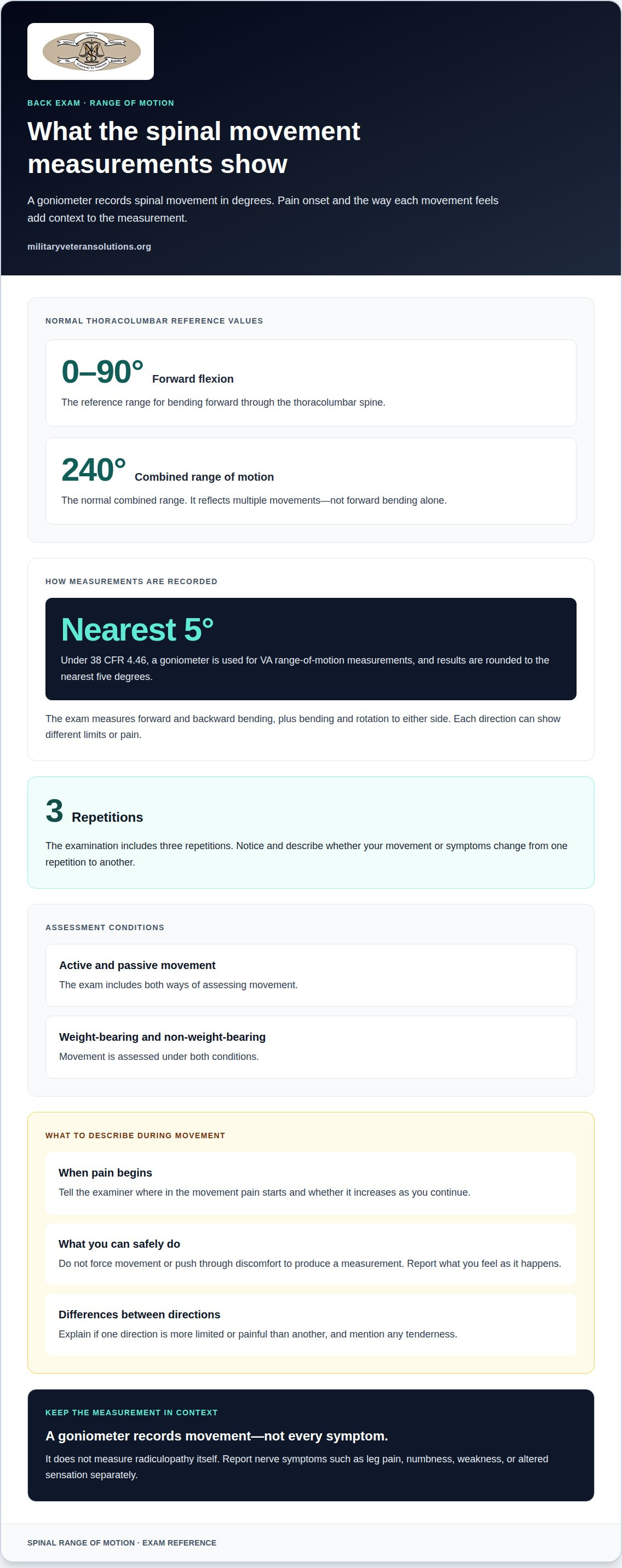
A goniometer measures spinal movement in degrees during a back examination. The recorded motion, pain onset, and examination method can help show how your back condition affects your function.
Forward Flexion and Thoracolumbar Motion
Forward flexion measures how far you bend forward, while thoracolumbar testing assesses movement through the lower and middle back. These measurements matter because VA spine criteria use motion findings when evaluating a back disability.
Normal thoracolumbar forward flexion is 0-90 degrees, and normal combined range of motion is 240 degrees. The examiner also measures bending and rotation, documenting the point when pain begins. These measurements describe different movements, so one forward-bend result doesn’t represent the entire examination.
Under 38 CFR 4.46, a goniometer is used for VA range-of-motion measurements. The examiner measures thoracolumbar movement and rounds the result to the nearest five degrees. The exam includes active and passive movement, weight-bearing and non-weight-bearing assessments, and 3 repetitions. Don’t force a motion; report what you feel as it happens.
Each direction adds information. Bending forward, leaning backward, and bending or rotating to either side can produce different limits or pain. For example, you may bend forward farther than you can rotate, or pain may start during one movement but not another. Explain those differences clearly. A goniometer records motion, not every symptom, and it doesn’t measure radiculopathy itself.
Pain and Tenderness During Movement
Painful motion means pain occurs while the examiner assesses movement; tenderness is pain or sensitivity noted during the examination. These findings matter because a degree measurement alone may not capture when symptoms begin or how movement feels.
Tell the examiner when pain starts, whether it increases as you continue, and whether tenderness occurs in a particular area. For instance, explain if forward bending causes pain before you reach your limit, or if a specific position brings on tenderness. Describe your symptoms clearly rather than minimizing them or pushing through them.
For a useful record of the examination, focus on what the movement shows:
- Note the direction that causes pain and when it begins.
- Describe whether each repetition changes your motion or symptoms.
- Explain any difference between bending, rotation, and backward movement.
If you’re pursuing Veteran Claims Representation, a representative can help you consider how examination findings fit with your claim evidence.
Can Radiculopathy or Sciatica Increase Your VA Rating?
Yes. Associated objective neurologic abnormalities can be evaluated separately from the spinal condition under an appropriate diagnostic code. That means nerve symptoms can affect the overall disability rating beyond the spine’s motion criteria.
Radiculopathy and Neurologic Abnormalities
Radiculopathy describes nerve-related symptoms associated with the spine, such as symptoms affecting a leg. It matters because the VA spine rating formula directs associated objective neurologic abnormalities to be evaluated separately.
For example, sciatica or radiculopathy affecting a lower extremity may be evaluated under Diagnostic Code DC 8520. The separate sciatic nerve rating starts at 10 percent for mild symptoms. The rating depends on the documented nerve impairment, so describe the affected areas and functional limitations precisely.
Other neurologic symptoms may also be relevant to how a claim is evaluated. Report symptoms such as leg weakness, numbness, or altered sensation, including which side is affected and how the symptoms interfere with activities. A clear account helps connect the symptoms to the findings considered under the appropriate criteria.
Neurological Testing for Radiculopathy
A neurological examination checks for signs that may point to radiculopathy, rather than measuring spinal movement alone. The examiner may test leg reflexes, strength, and sensation. These findings help document whether nerve-related abnormalities are present.
During testing, follow each instruction and tell the examiner what you feel. If one leg feels weaker or a sensation test feels different between sides, identify the difference. Don’t describe a finding you don’t experience, and don’t leave out intermittent symptoms just because they aren’t present at that moment.
Keep your account specific. Explain where a symptom travels, whether it affects one or both legs, and what activity it limits. For instance, distinguish numbness in one area from weakness that makes standing difficult. These details add context to the examiner’s findings without requiring you to diagnose the cause.
A separate nerve evaluation is distinct from the rating for spinal motion or ankylosis. The evidence must identify an associated objective abnormality and support evaluation under the relevant diagnostic code. A back claim can therefore involve more than one rating question: how the spine itself is evaluated, and whether documented neurological effects warrant separate consideration.
- Describe the location and side of each nerve symptom.
- Explain how symptoms affect movement or daily activities.
- Answer reflex, strength, and sensation test instructions accurately.
Specific symptom descriptions and examination findings help show how neurological limitations relate to your back disability and claim evidence.
How do the spine rating criteria relate to the exam?
The examination records movement and other findings that can be compared with VA back-rating criteria. Thoracolumbar measurements are one part of the evidence; other criteria address ankylosis and intervertebral disc syndrome.
What should I do if the C&P exam report is inaccurate or incomplete? If required testing was omitted or the examination was rushed, submit a dated VA Form 21-4138 within 48 hours after the exam. You can request the final examination report using VA Form 20-10206.
Can I reschedule or request a new C&P exam? You can request to reschedule, and VA asks for at least 48 hours’ notice when possible. If testing was omitted or the examination was rushed, document the specific issue after the appointment.
Thoracolumbar Rating Thresholds and Tiers
Thoracolumbar rating tiers use examination findings, including forward flexion and ankylosis. Understanding the thresholds helps you see why precise measurements and other evidence matter to a back rating.
According to the Electronic Code of Federal Regulations, forward flexion greater than 60 degrees but not greater than 85 degrees is one criterion for a 10% rating. Forward flexion greater than 30 degrees but not greater than 60 degrees is one criterion for a 20% rating, according to the Electronic Code of Federal Regulations. Forward flexion of 30 degrees or less is one criterion for a 40% rating, according to the Electronic Code of Federal Regulations.
These are criteria, not the only possible basis for those ratings. Combined range of motion and other findings can also matter. The thoracolumbar formula has no 30% step between its 20% and 40% ratings. According to the Electronic Code of Federal Regulations, unfavorable ankylosis of the entire thoracolumbar spine corresponds to a 50% rating.
The IVDS formula provides another route for evaluating qualifying incapacitating episodes. According to the Electronic Code of Federal Regulations, episodes totaling at least 6 weeks in the past 12 months correspond to a 60 percent rating.
Reviewing a Back Rating
A back rating may warrant review when the decision’s explanation appears inconsistent with the examination or claim evidence. Compare the recorded lumbar spine findings with the applicable criteria, including measured motion and any documented ankylosis.
Look for specific gaps: a recorded measurement that doesn’t match the examination report, symptoms absent from the examiner’s account, or omitted required testing. If an examination was rushed or required testing was omitted, VA Form 21-4138 can document the concern. A copy of the report, requested using VA Form 20-10206, helps you identify what it records.
- Compare the decision’s stated findings with the examination report.
- Identify the exact measurement, symptom, or test at issue.
- Connect the concern to the rating criterion or evidence involved.
For example, if the report records forward flexion in one tier but the decision discusses another, identify both entries clearly. A review of military records may also help clarify service history relevant to a claim or appeal.
C&P exam purpose and medical records review
A back C&P examination gives the examiner information about your condition and its effects. The examination findings and medical records help inform VA’s review of your disability claim. Records matter because a single appointment may not show the full history, treatment, or changes in your back condition.
Before the appointment, gather relevant private treatment records that VA may not have. Include records that identify a diagnosis, describe treatment, or document changes over time. For example, a physical therapy note may describe difficulty with a movement that isn’t apparent during the examination. Bring medication names and doses, and explain whether each medication helps.
Think of the exam and records as complementary evidence. The examiner observes and documents findings during the appointment; treatment notes can show what happened between visits. A record describing a recurring limitation, for example, adds context to a day when symptoms are less pronounced. Be ready to explain which provider or record relates to the condition being examined.
Keep your account consistent with the documents, but don’t assume the examiner has seen every private record. If a treatment note describes a change in your back condition, identify it and explain its relevance. A diagnosis in a record, such as lumbar spine disease, provides context; your account can clarify how it affects everyday activities.
Organize the material so you can find key details without searching through a stack during the appointment. A simple timeline can identify:
- When a diagnosis or treatment began, as shown in the record.
- Changes in care, such as a new medication or physical therapy.
- Relevant findings, such as a note describing limited movement.
- Medication names and doses, plus whether they reduce symptoms.
Appointment length can vary. A VA examination may last 15 minutes, an hour, or longer; a VA Lumbar Spine DBQ examination lasts about an hour. Use the time to answer the examiner’s questions clearly, and mention relevant records rather than trying to summarize every page. If forward flexion or another finding appears in a treatment note, describe the context and date shown there.
When the decision arrives, compare its discussion with the examination and submitted records. If a relevant private note or treatment detail appears absent, identify the specific document and what it records. To build a clearer service-history record alongside medical evidence, organize a military-record review.
Military Veteran Solutions: Filing VA appeals
Military Veteran Solutions helps veterans address VA decisions through decision letter analysis, claims representation, and filing VA appeals. If your back claim decision doesn’t reflect examination findings or relevant records, reviewing the reasons and evidence can clarify what an appeal needs to address.
Military Record Reviews can also help identify service records relevant to a claim. Bring together the decision letter, examination report, and supporting records so the issues can be assessed in context. This is a practical next step when you’re unsure why VA reached its decision or what evidence the appeal should address.
For help reviewing a VA decision or pursuing an appeal, contact Military Veteran Solutions for a free initial consultation or visit militaryveteransolutions.org.
Carry Your Preparation Into the Next Decision
Your examination is one part of a larger VA claim record. Keep your account, examination findings, and decision documents connected so you can understand how the evidence was considered. If a decision leaves you uncertain about what comes next, focus on the specific question you need answered and the documents that relate to it. While resolving disability claims is often the immediate priority, navigating chronic service-connected pain can also place significant strain on home life; veterans and families managing domestic transitions during these periods can consult resources from The Sands Law Group, APLC for guidance on family law matters.
Strong C&P exam tips for back pain begin with honest, precise reporting, but preparation can also help you assess the decision that follows. You don’t have to sort through a complicated record alone. Military Veteran Solutions helps veterans consider options involving VA claims and appeals.
Take the next step when you’re ready. Contact Military Veteran Solutions to discuss your VA claim. Your experience deserves to be clearly understood, and informed action can help you move forward with greater confidence.
Frequently Asked Questions
Does a normal exam day erase my flare-ups?
No. A better-than-usual day doesn’t erase flare-ups, but the examiner needs a clear account of how they differ from your usual symptoms. Explain what happens during a flare, what you can do less easily, and how the pattern changes over time. For example, describe a day when symptoms ease after rest compared with one when they continue to limit movement. Keep your description accurate and consistent with your records.
How Does the VA Rate Back Pain?
VA evaluates back conditions using applicable spine criteria and evidence, including examination findings. Thoracolumbar forward flexion and combined motion can be relevant, as can ankylosis or qualifying intervertebral disc syndrome episodes. VA typically considers multiple back diagnoses together when assigning a thoracolumbar spine rating, rather than giving each diagnosis a separate spine rating. Related objective neurological abnormalities may be considered separately under an appropriate diagnostic code.
How should you describe radiating pain or numbness?
Describe the sensation in your own words and explain its pattern without trying to diagnose it. For example, distinguish sharp pain that travels from your back from numbness or tingling in a specific area. Say whether it comes and goes, changes with activity, or feels different at different times. If you have notes from treatment visits, use them to recall the terms and symptom pattern you previously reported.
What Counts as a Lumbar Spine Condition?
A lumbar spine condition is a claimed disability involving the lower-back region. VA’s General Rating Formula for Diseases and Injuries of the Spine is cited at 38 CFR 4.71a, including diagnostic codes 5237 and 5242. A diagnosis name alone doesn’t determine the rating. The decision considers the relevant criteria and evidence, including examination findings. If records use different diagnostic terms, note which condition your claim identifies.
What does a back-pain C&P exam assess?
A back-pain C&P exam documents findings relevant to the claimed condition, including spinal movement, pain, and possible neurological abnormalities. The examiner may assess forward flexion and other movement, then record when pain begins. They may also check leg reflexes, strength, and sensation. The appointment is an evaluation, not a treatment visit, so describe your symptoms and answer questions about how the condition affects your functioning.
What is a VA C&P exam for back pain?
It’s an examination used to gather medical findings about a back condition claimed for VA disability compensation. The examiner records observations and your account, which become part of the claim evidence considered in the VA decision. It isn’t an appointment to treat your back. For instance, the examiner may document movement and symptoms without providing a treatment plan or deciding your claim during the appointment.
How should I prepare for a VA back pain C&P exam?
These C&P exam tips for back pain can help you prepare: arrive 15 minutes early for an in-person examination, and bring private treatment records VA may not have. Write down medication names and doses, plus whether each medication helps. Before you leave home, review the appointment details and organize documents so you can find a relevant record quickly instead of searching through papers during the visit.
What physical tests are performed during a back C&P exam?
The examiner may measure thoracolumbar movement with a goniometer and assess forward bending, backward movement, side bending, and rotation. Range-of-motion testing includes active and passive movement, weight-bearing and non-weight-bearing assessments, and 3 repetitions. The examiner may also test leg reflexes, strength, and sensation. These checks document different aspects of the examination, so follow each instruction and report discomfort as a movement or test occurs.