
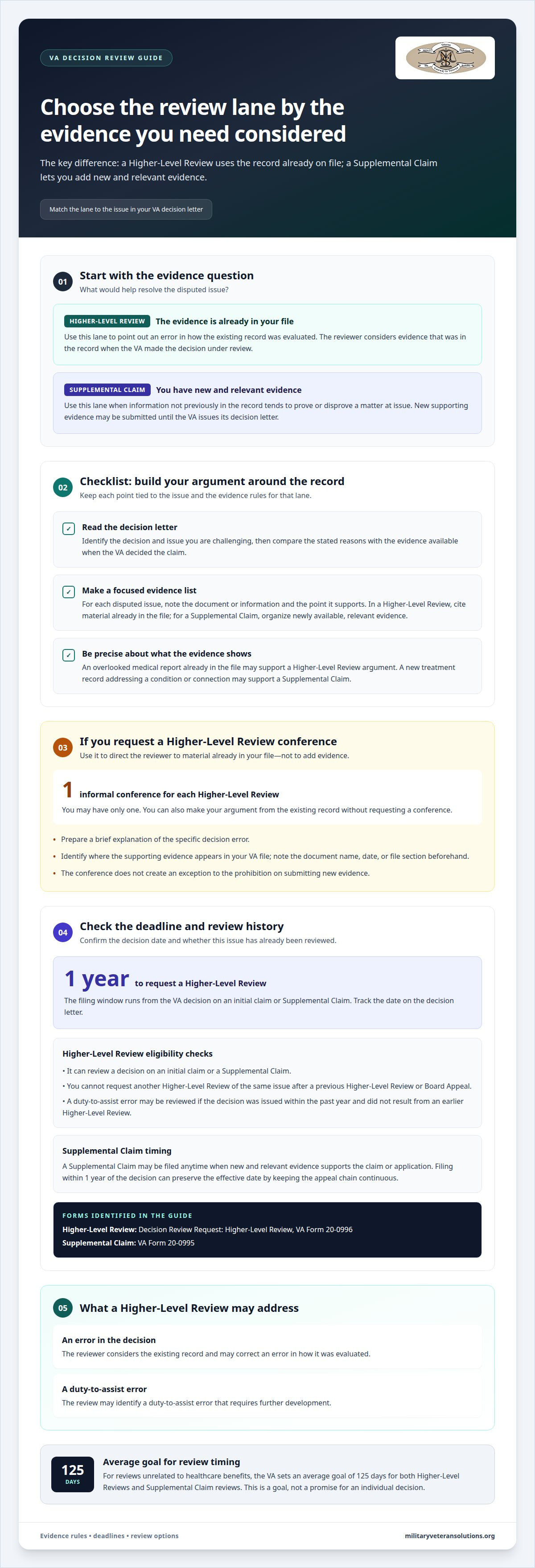
The right review option depends on what your case needs, not on which one sounds stronger. The difference between a supplemental claim and higher-level review comes down to evidence: a Supplemental Claim lets you submit new and relevant evidence, while a Higher-Level Review considers the evidence already in your file. You can’t add new evidence during a Higher-Level Review.
It’s understandable to focus on getting a VA decision reconsidered, especially when the decision feels incomplete or incorrect. The next step is matching the review option to the problem: new evidence points toward a Supplemental Claim, while an error in how the existing record was evaluated may point toward Higher-Level Review. A Higher-Level Review generally must be requested within 1 year of the VA decision on an initial claim or Supplemental Claim, according to the U.S. Department of Veterans Affairs.
This guide explains how evidence rules, eligibility, deadlines, and possible outcomes affect your choice. You’ll learn what each review can address and how to prepare for the option that fits your situation.
Key Takeaways
- Use an informal conference to direct the reviewer to relevant material already in your file and explain the decision error.
- Before choosing a review lane, check whether the decision followed an earlier Higher-Level Review or Board Appeal on the same issue.
- A Higher-Level Review can correct an error or identify a duty-to-assist error that requires further development.
- After a Supplemental Claim decision, consider the available next review option based on the decision and whether you have additional new evidence.
- A careful review of your VA decision letter and records can help you identify the issue to raise and prepare your appeal.
The prohibition on submitting new evidence in Higher-Level Review
How long does each VA review option take? For reviews unrelated to healthcare benefits, the U.S. Department of Veterans Affairs sets an average goal of 125 days for both Higher-Level Reviews and Supplemental Claim reviews. These are average goals, not a promise that an individual decision will arrive by that point.
Can you request an informal conference for a Higher-Level Review? Yes. According to the U.S. Department of Veterans Affairs, you may have only 1 informal conference for each Higher-Level Review. Use it to explain the decision error and point to evidence already in your file, not to submit new material.
- Decide whether your argument relies on the existing record. Under 38 C.F.R. § 3.2601(f), you cannot submit new evidence during a Higher-Level Review. The reviewer considers evidence already in the record when the VA made the decision under review. For example, you can identify a medical report already in the file that the decision letter overlooked, then explain why it matters. A new medical report created after that decision cannot be added in this review lane.
- Use the informal conference to focus the review. Prepare a brief, clear explanation of the specific error and identify where the supporting evidence appears in your VA file. The conference lets you direct the reviewer to existing records, but it does not create an exception to the evidence restriction. Note the document name, date, or file section beforehand to make your point precise. You can also argue from the existing record without requesting a conference.
- Choose a Supplemental Claim when new evidence is relevant. Under 38 C.F.R. § 3.2501(a), new and relevant evidence is information not previously part of the record that tends to prove or disprove a matter at issue. A new treatment record, for example, may address a condition or connection that the VA decision did not find established. Explain what the evidence shows and how it relates to the issue. You may continue submitting supporting evidence until the VA issues its decision letter.
- Match each item to the disputed issue before filing. Make a simple evidence list that identifies the issue, the document or information, and the point it supports. For a Higher-Level Review, use the list to cite material already in the record, not to attach new documents. For a Supplemental Claim, use it to organize newly available, relevant evidence. An accredited representative can help frame your arguments, but the review option still determines whether new evidence may be considered.
- Keep the decision letter and filing record together. The letter identifies the VA decision you’re challenging. Compare its reasons with the evidence available when the decision was made. If the existing record supports your position, a Higher-Level Review may fit. If information missing from the record could prove or disprove the issue, a Supplemental Claim provides a way to submit evidence. This distinction helps keep your argument within the review’s rules.
Eligibility and filing deadline for a Higher-Level Review
What are the deadlines for filing a Supplemental Claim or Higher-Level Review? In the United States, a veteran must request a Higher-Level Review within 1 year of the VA decision on an initial claim or Supplemental Claim, according to the U.S. Department of Veterans Affairs. A Supplemental Claim may be filed anytime when new and relevant evidence supports the claim or application.
How do you file a VA Supplemental Claim or request a Higher-Level Review? Submit Decision Review Request: Higher-Level Review, VA Form 20-0996, for Higher-Level Review. Use VA Form 20-0995 for a Supplemental Claim.
- Check which decision you want reviewed. A Higher-Level Review can address a decision on an initial claim or a Supplemental Claim. It may also address a duty-to-assist error if the decision was issued within the past year and did not result from an earlier Higher-Level Review. Compare the decision date and issue with your current appeal before choosing this option.
- Confirm the issue has not already gone through the same lane. You can’t request another Higher-Level Review of an issue after a previous Higher-Level Review or Board Appeal on that same issue. If the VA decision followed either process, don’t file Form 20-0996 for that issue. Identify the issue and the latest decision first, since separate issues can have different review histories.
- Track the one-year deadline from the decision. Mark the date on the VA decision letter and calculate the filing window from that date. The deadline applies to a decision on an initial claim or Supplemental Claim. Don’t count from when you opened the letter or gathered supporting records. If the deadline is approaching, prioritize submitting the correct decision review form.
- Choose a Supplemental Claim if new, relevant evidence supports the issue. A Supplemental Claim may be filed anytime when new and relevant evidence supports the claim or application. However, filing within 1 year of the decision can preserve the effective date by keeping the appeal chain continuous. For example, evidence that addresses the reason for a denied rating may support this lane. Use VA Form 20-0995 and identify the issue the evidence relates to.
- Prepare the form around the decision’s stated errors. For Higher-Level Review, use VA Form 20-0996 and identify the decision and issues you want reviewed. For a Supplemental Claim, use VA Form 20-0995 and connect relevant evidence to the disputed issue. An accredited attorney can help assess the decision letter, rating, filing history, and evidence before you choose. A focused VA decision letter analysis can help clarify which errors and review lane to address.
When to choose a Higher-Level Review
You can’t switch review options while a decision is pending. Wait for that decision before choosing another. After a Supplemental Claim decision, you may request Higher-Level Review or a Board Appeal, or file another Supplemental Claim with new evidence.
- Choose Higher-Level Review when the existing record supports your argument. A senior adjudicator reviews the evidence without relying on the original decision-maker’s conclusions. This option may fit if the VA overlooked a service record, misread a medical opinion already on file, or applied the wrong rating criteria to documented facts. Identify the specific error and point to the existing evidence that supports a different decision.
- Use an informal conference to make your argument clear. Prepare the issue, the decision’s reasoning, and the record evidence that conflicts with it. For example, if the decision letter says a diagnosis is absent, identify the diagnosis already in the file. The conference is for explaining the error and directing the reviewer to existing evidence, not for submitting new records or testimony.
- Choose a Supplemental Claim when new evidence could change the decision. A recently obtained service record or medical document may address a gap identified by the VA. Ask whether the material is new to the record and relevant to the issue. If it tends to prove or disprove that issue, organize it around the disputed claim and explain what it shows.
- Compare the decision’s stated reason with your available evidence. Read the VA decision letter and note each reason for a denial, low rating, or other unfavorable finding. Then sort your response into two groups: evidence already in the file and evidence not previously considered. The first group may support a Higher-Level Review argument; the second may support a Supplemental Claim.
- Check your appeal status before filing another review option. Confirm whether the current decision review is pending or has concluded. If you chose the wrong option, you must wait for a decision in that lane before selecting another. Once a Supplemental Claim decision arrives, match your next step to the result: request Higher-Level Review to challenge an alleged error, file a Board Appeal, or submit another Supplemental Claim if you have additional new evidence.
- Build a focused filing plan, then get assistance if the record is complex. Write down the issue, the specific error or evidence, and what you’re asking the VA to reconsider. For example, a rating dispute based on records already reviewed differs from a claim supported by a newly located service document. An accredited representative can help you assess the distinction and organize your argument before filing.
Higher-Level Review outcomes
If a Supplemental Claim or Higher-Level Review is denied, read the decision letter and identify the reasons. After a Supplemental Claim decision, you may request Higher-Level Review or a Board Appeal, or file another Supplemental Claim with new evidence.
- Compare the outcome with the issue you appealed. Check whether the VA addressed each disability or rating issue you identified. For example, a decision may resolve one issue while leaving another deferred. Separate decided issues from any pending matter before planning your next step.
- Look for a changed decision or an error finding. A Higher-Level Review examines the existing record, and the reviewer may identify a duty-to-assist error. If so, the VA can return the matter for additional development, such as gathering evidence needed to decide the claim. That return is a development step, not the final resolution of the disability issue.
- Check whether the decision addresses the connection at issue. If the relationship between your disability and military service was disputed, review the VA’s reasoning. Compare it with the evidence cited in the decision. For instance, note whether the letter discusses the relevant service record or medical opinion already in the file.
- After an unfavorable Higher-Level Review, assess the Board Appeal option. You may appeal a Higher-Level Review decision to the Board of Veterans’ Appeals using VA Form 10182. Before filing, identify the specific outcome you dispute and the reasons in the VA decision letter. Keep the form focused on the issue the reviewer decided.
- For a Supplemental Claim decision, match your next option to what changed. If the decision overlooked an error in the record it considered, Higher-Level Review may address that concern. If you have additional new and relevant evidence, another Supplemental Claim may fit. A Board Appeal is also an option after a Supplemental Claim decision.
- Organize the record before taking another step. Keep the initial decision, review request, and latest VA letter together. Create a brief timeline showing each decision and the issue it addressed. A representative can use that sequence to distinguish a new evidentiary gap from disagreement about how the existing record was evaluated.
Each outcome calls for a different response. If a duty-to-assist error is returned for development, pay attention to the VA’s next action. If the decision is final, choose an available review option based on the issue and evidence.
How Higher-Level Review differs from a Supplemental Claim
- Choose based on what needs to change. Higher-Level Review asks a senior adjudicator to reconsider the decision using the record already before the VA. A Supplemental Claim lets you provide new and relevant evidence. For example, if the decision overlooked a service record already on file, focus on review of the existing record. If a newly located record could support your claim, consider submitting it through a Supplemental Claim.
- Check who reviews the decision and what they can consider. Under 38 C.F.R. § 3.2601, a Higher-Level Review is conducted by a reviewer who did not participate in the earlier decision. The reviewer considers the case anew, rather than simply adopting the original decision-maker’s conclusions. But the review remains limited to evidence already in the record. A conference can help you explain an error, not add a new medical opinion.
- Assess whether the VA needs to develop evidence. The VA has a duty to assist with gathering evidence for Supplemental Claims, but not for Higher-Level Reviews or Board of Veterans’ Appeals reviews. This difference matters when a disability compensation claim needs additional records to address a disputed issue. If the key document is already in the file, point to it in a Higher-Level Review. If new relevant evidence is needed, a Supplemental Claim may fit better.
- Separate disagreement about reasoning from a gap in proof. Read the denial letter and identify the specific finding you dispute. If the VA acknowledged a medical opinion but interpreted its connection to service incorrectly, explain the issue using the existing record. If the record lacked an opinion or another relevant document, new evidence may address the gap through a Supplemental Claim. The distinction depends on what the record contains, not on which option sounds more forceful.
- Match the filing to the evidence, then organize the argument. List each disputed issue, the VA’s reason, and the evidence that responds to it. Mark whether each item was already in the record or is newly available. Use the first group to frame a Higher-Level Review argument and relevant new material to support a Supplemental Claim. An accredited representative can help organize the analysis, especially when a decision involves several issues or opinions.
- Get a focused review before submitting a complex appeal. A record with multiple disability issues may contain both an alleged evaluation error and evidence that was not previously considered. Separate those concerns instead of treating every issue as the same appeal. A review of your VA decision and records can help clarify which evidence belongs in the existing record argument and which supports a Supplemental Claim.
Military Veteran Solutions: Filing VA appeals
Military Veteran Solutions, LLC helps veterans assess VA decisions and pursue appeals that need careful preparation. If you’re weighing a Higher-Level Review against a Supplemental Claim, a VA Decision Letter Analysis can clarify the issues and evidence cited in the decision. Military Record Reviews can help identify service documents relevant to your claim, while Veteran Claims Representation supports you through the claims and appeal process.
Consider reaching out when you need help organizing the record, understanding the VA’s reasons, or preparing an appeal that fits your situation. The aim is a clear, evidence-based next step, not a promised outcome. Contact Military Veteran Solutions, LLC to discuss your VA appeal.
Take the Next Step With a Clear Appeal Strategy
Your next move can shape how the VA considers the issue, so make it deliberately. Decide what you want the review to address: an error in the decision, additional evidence, or both across separate issues. Understanding the difference between a Supplemental Claim and a Higher-Level Review is a useful starting point, but your filing should reflect the evidence and reasoning in your own record. For veterans who are also reviewing their broader healthcare options in retirement, Medicare Mentors offers guidance on navigating Medicare coverage alongside existing benefits.
Military Veteran Solutions can help you move from uncertainty to an organized appeal through VA appeals filing, Veteran Claims Representation, and Military Record Reviews. If you need support assessing the decision and preparing your next step, contact Military Veteran Solutions today. You don’t have to sort through every document and decision alone. Take the next step with a clear view of your options and the record behind your claim.
Frequently Asked Questions
What Are Your Options for AMA VA Disability Appeals?
The VA’s decision review system offers three options: Higher-Level Review, Supplemental Claim, and Board Appeal. At the Board, veterans can choose Direct Review, Evidence Submission, or a Hearing docket. Consider what your case needs: a fresh review of the existing record, consideration of additional evidence, or review by the Board. The best fit depends on your disagreement and the material you want considered.
What Is the VA Supplemental Claim Lane?
The Supplemental Claim lane lets you ask the VA to reconsider a decided issue using new and relevant evidence. Veterans file Decision Review Request: Supplemental Claim, VA Form 20-0995. For instance, if your original application lacked a military record that could support the disputed issue, you can submit it with your request. The VA may also help gather evidence for a Supplemental Claim.
What counts as ‘new and relevant’ evidence?
Under 38 C.F.R. § 3.2501(a), evidence is new and relevant when it wasn’t previously part of the record and tends to prove or disprove an issue. A newly located service document might help address a disputed event during service. A medical record could speak to a disability or its connection to service. Explain how each item relates to the specific matter the VA decided.
Which Review Lane Is Best for Your VA Appeal?
Choose based on why you disagree and what information can address the issue. If the VA decision appears to misread a document already in the file, consider Higher-Level Review. If you have additional evidence that could address a gap, consider a Supplemental Claim. If you want the Board to review the dispute, a Board Appeal is another option. Match the review option to the issue, not simply the outcome you hope for.
What is a VA supplemental claim?
A VA Supplemental Claim is a request to revisit an issue after a VA decision, supported by new and relevant evidence. It can apply when a veteran has additional information that may change how the VA evaluates that issue. Submit VA Form 20-0995 and identify the matter the evidence concerns. Keep copies of submitted documents so you can track what the VA received and what the decision addresses.
How do supplemental claims and higher-level reviews differ?
The difference between a Supplemental Claim and a Higher-Level Review is what the VA can consider. A Supplemental Claim brings new and relevant evidence into the review; Higher-Level Review is based on the existing record. For example, disagreement about how a report was interpreted points to an existing-record argument. A new document relevant to the issue may instead support a Supplemental Claim.
Can you submit new evidence in a VA higher-level review?
No. A Higher-Level Review doesn’t allow you to submit new evidence or offer testimony, including during an informal conference. If you submit new material, the reviewer may defer the matter to a Supplemental Claim or decide without considering evidence that isn’t relevant. Keep conference notes focused on the error you believe the VA made and where the supporting evidence already appears in your file.