
A low VA rating is challenged by identifying what the decision overlooked, supporting the severity and impact of your condition with relevant evidence, and choosing the appeal route that fits your case. The VA offers three avenues: higher-level review, a supplemental claim, or review by the Board of Veterans’ Appeals. To understand how to fight a low VA rating, start with the decision and the medical record behind it.
It’s understandable to wonder whether you need a VA benefits attorney. You don’t have to settle that question first. Begin by understanding why the VA assigned the rating and what evidence could address the gap. Higher-level review uses the existing record, while a Supplemental Claim allows you to submit new evidence.
This guide explains how to assess a rating decision, organize relevant evidence such as updated records, medical opinions, Disability Benefits Questionnaires, and statements from people familiar with your daily life, and decide whether higher-level review fits. You’ll learn to connect evidence to the symptoms and functional effects the VA evaluates, so your next step is grounded in the facts of your claim.
Key Takeaways
- Compare the rating decision with your medical records to identify symptoms, limitations, or findings the VA may have overlooked.
- Use medical opinions, Disability Benefits Questionnaires, and statements from people familiar with your daily life to clarify how your condition affects you.
- If the VA proposes a rating reduction, the U.S. Department of Veterans Affairs allows 60 days from the proposal date to submit supporting evidence.
- Choose an appeal route based on whether you need to add evidence or ask for review of the existing record; higher-level review does not accept new evidence.
- Consider how a change to one condition could affect your combined rating, and whether a long-standing rating has protection against reduction.
Using medical records and therapist statements in an appeal
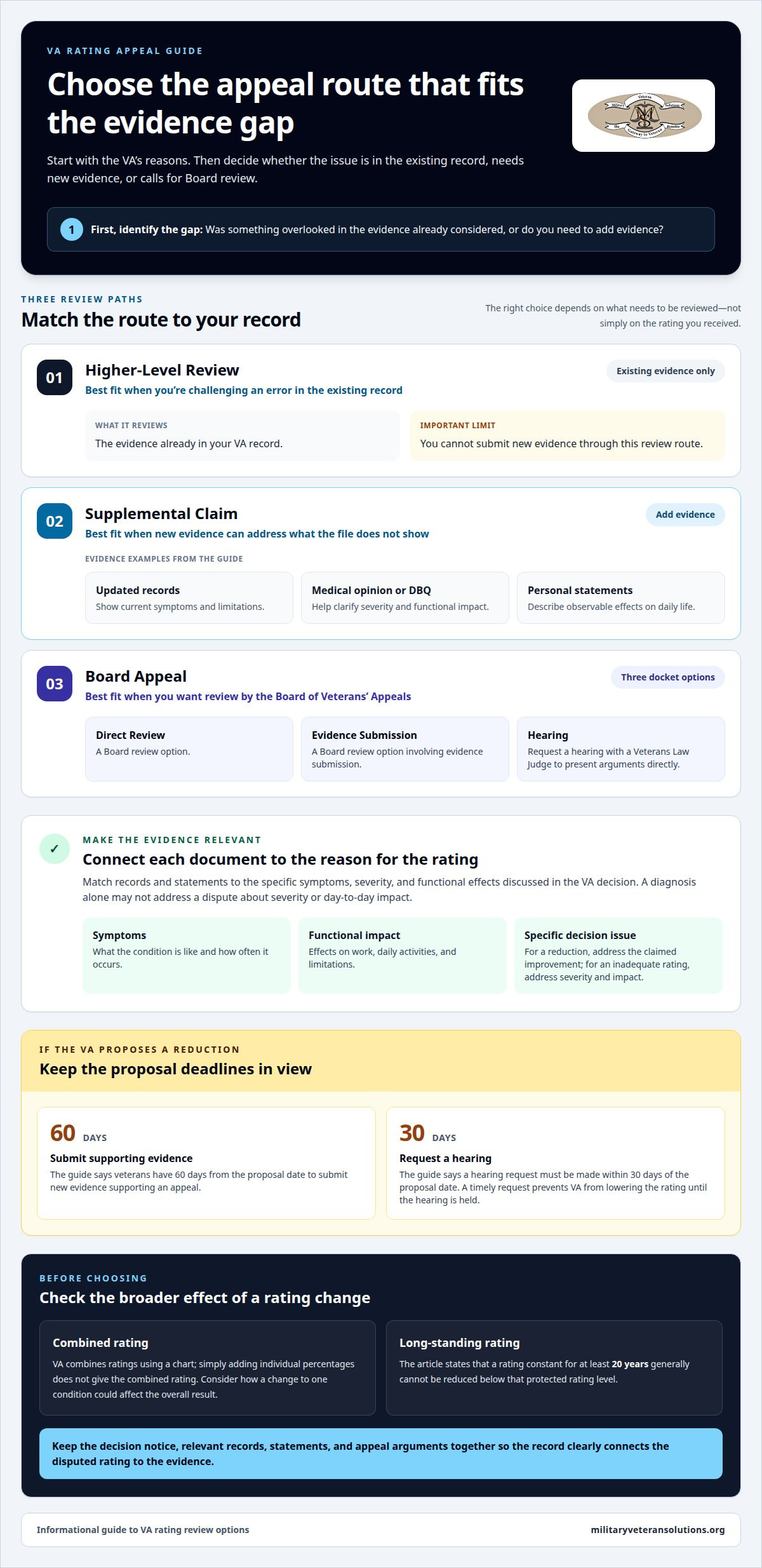
No single VA appeal option suits every low rating. Use higher-level review to challenge an error in the existing record, a Supplemental Claim to add evidence, or a Board Appeal to request review by a Veterans Law Judge or ask for a hearing. An appeal may result in additional disability benefits; the effective date determines the period recognized.
-
Gather Medical Records and Therapist Statements
Match treatment records and therapist statements to the symptoms and limitations discussed in the VA decision. Updated records can show how a condition affects daily life, while a therapist’s observations may describe recurring symptoms and their practical effects. Make sure each document concerns the condition under appeal and supports your point. If the dispute is about severity or functional impact, a diagnosis alone may not address it.
-
Address a Rating Reduction
Respond to a proposed reduction by organizing current medical records and statements that describe your condition’s ongoing severity. After a VA proposed disability rating reduction, veterans have 60 days from the proposal date to submit new evidence supporting an appeal, according to the U.S. Department of Veterans Affairs. A request for a hearing is another action to consider; the proposal notice and the evidence already on record help frame the response.
- Check whether the issue is an inadequate rating or a reduction, because the evidence must answer the specific decision. For an inadequate rating, compare the VA’s reasons with records describing symptom severity and effects on work or daily activities. For a reduction, identify evidence that addresses the claimed improvement. According to the Office of the Federal Register, a VA disability rating that has remained constant for at least 20 years generally cannot be reduced below that protected rating level.
- Choose the review route that matches the gap in the record. Higher-level review examines existing evidence and does not accept new evidence. A Supplemental Claim allows additional evidence, such as updated medical records or a therapist’s statement. A Board Appeal offers Direct Review, Evidence Submission, and Hearing dockets. You can request a hearing with a Veterans Law Judge; this may suit you if you want to present your arguments directly.
- Track the decision date and the effect on combined disability benefits. Veterans typically have one year from the date of a VA decision to challenge it, according to the U.S. Department of Veterans Affairs. If a reduced condition changes the combined rating, assess the resulting decision rather than judging that condition alone. Keep the notice, medical records, therapist statements, and appeal arguments together so the record clearly connects the disputed rating to the evidence.
How does the combined ratings formula affect whether I should appeal?
Consider the disputed condition and its effect on your combined rating before choosing an appeal route. The VA combines ratings rather than simply adding each condition’s percentage.
- Review each condition’s rating and the combined result shown in your decision. The VA combines your two highest-rated conditions first, then combines that result with each next-highest-rated condition. Because it uses a chart, adding individual percentages won’t give you the combined rating. Focus on whether the evidence supports the rating you’re challenging and whether a change could affect your overall benefits.
- Estimate the broader impact of a proposed reduction before deciding how to respond. A reduction to one condition can lower your combined rating and may affect benefits near the 50 percent threshold. Consider the condition’s current rating, the other rated conditions, and the combined result. This helps distinguish a condition-specific disagreement from a change that may also affect compensation.
- Submit evidence by the deadline stated for the proposal. After a VA proposed disability rating reduction, veterans have 60 days from the proposal date to submit new evidence supporting an appeal, according to the U.S. Department of Veterans Affairs. Useful evidence may include updated medical records, a treating professional’s opinion, or statements from family members and coworkers describing observable changes or continuing limitations.
- Request a hearing promptly if presenting your case directly matters. After a VA proposed disability rating reduction, veterans have 30 days from the proposal date to request a hearing, according to the U.S. Department of Veterans Affairs. Requesting a hearing after a proposed reduction prevents VA from lowering the rating until the hearing is held. Keep the proposal notice, hearing request, and supporting statements together.
- Choose a Supplemental Claim when new evidence is central to your disability claim. Updated records, a diagnosis document, or an independent medical opinion can address what the existing file does not show. Explain how each item supports the requested rating rather than sending records without context. For help connecting the decision’s reasoning to the evidence, VA Decision Letter Analysis can clarify which findings the appeal needs to address.
Medical opinions and Disability Benefits Questionnaires
- Compare the rating decision with the VA Schedule for Rating Disabilities criteria for your condition. The schedule sets condition-specific criteria, and the VA evaluates symptom severity and effects on daily life or work. Mark each criterion discussed in the decision, then compare it with your medical evidence. Documented limitations or symptoms that the decision doesn’t address may signal that the rating is too low.
- Ask a treating medical professional for an opinion that addresses the specific gap. A useful opinion explains the diagnosis, symptoms, severity, and functional effects, then relates those findings to the disputed rating criteria. A bare conclusion that your rating should increase is less helpful. For example, a therapist’s account of how symptoms affect work can add context if the decision gives little attention to occupational impact.
- Use a Disability Benefits Questionnaire to organize relevant clinical findings for the condition under review. Compare its answers with the decision and identify missing, inconsistent, or incomplete findings. For example, the lumbar spine criteria distinguish a ten-percent from a twenty-percent rating using forward flexion of less than sixty degrees. A medical record or examination documenting measured movement can help explain why that distinction matters.
- Consider how each condition affects your combined rating, but don’t add the percentages yourself. The VA uses a chart, starting with the two highest-rated conditions and then applying each next-highest rating. Changing one disability may therefore affect the combined result differently than simple addition suggests. Review both the individual evaluation and the combined rating in your decision.
- Challenge an inadequate C&P exam by identifying its specific flaw in your appeal. Explain whether the examiner missed symptoms, overlooked relevant records, or failed to address daily or work-related effects, and support that point with medical documentation. To seek another examination, explain why the existing exam cannot answer the rating question and what findings need assessment. The VA assigns ratings from 0% to 100%, in increments of 10 percentage points.
- Read the decision carefully for any permanent and total designation; don’t assume a high percentage alone means the VA has made that finding. The rating decision’s language matters. The VA’s example of a veteran with PTSD who could not hold down a job but received a 50% disability rating illustrates why reported impact and assigned percentage may differ. Compare the evidence and stated criteria, then make the appeal address that difference directly.
The rating schedule sets criteria specific to your condition. Compare them with the symptoms, severity, and functional effects documented in your medical evidence and addressed in the rating decision.
Higher-level review
- Choose higher-level review if you believe the VA made an error based on evidence already in your claim file. This route does not allow new or additional evidence, so it fits disputes about how existing medical records, examination findings, or statements were evaluated. Before selecting it, identify the decision finding you challenge and the document or detail already in the record that conflicts with it.
- Compare the decision’s explanation with the evidence available when the VA made its decision. For example, if the decision describes symptoms as limited but an examination already recorded greater severity, cite that examination and explain the inconsistency. Keep your argument focused on the record and rating criteria. Updated treatment notes created after the decision belong in a review route that accepts new evidence, not higher-level review.
- Distinguish disagreement with the evidence from concern about how the VA handled it. A focused review request identifies the condition, the rating decision, and the disputed reasoning, then connects each issue to a record already submitted. If the VA overlooked a medical opinion or misread a finding, name the document and explain its relevance to your rating. A general statement that your compensation should be higher is not enough.
- Consider whether help from an attorney or another representative fits the complexity of your argument. For higher-level review, the key question is whether the existing file supports a different decision, not whether you can add another medical record. A representative can help organize the decision’s reasoning against the file. If your concern is worsening symptoms documented after the decision, consider a Supplemental Claim rather than trying to introduce those records during higher-level review.
- Choose another review route if your argument depends on evidence the VA has not considered. A Supplemental Claim allows new evidence, while a Board Appeal seeks review by the Board of Veterans’ Appeals. For a proposed reduction, distinguish the reduction notice from a final decision and follow the response options and deadlines stated in the notice. This keeps a challenge to the reduction separate from an appeal of an inadequate rating.
- Before submitting a request, make a concise issue list: the VA’s conclusion, the existing record relevant to it, and the error you believe occurred. For instance, connect a recorded work limitation to the decision’s discussion of functional impact. Don’t attach new medical records as though higher-level review could consider them. A clear, record-based argument helps the reviewer see why the existing evidence may support a different rating.
Medical records and documentation
- Build a timeline of treatment records related to the condition and rating decision. Arrange VA and private records by date or month, then note what each documents: diagnosis, symptoms, treatment, or functional effects. The VA should help veterans obtain records for care provided through the VA. Include relevant documents, but leave out unrelated records that don’t explain the condition or rating issue.
- Match each record to a specific point in the VA decision letter. If the letter describes symptoms as occasional, identify treatment notes documenting their frequency or severity. If it discusses work or daily activities, point to records explaining the limitations. An effective way to fight a low VA rating is to connect documented limitations directly to the decision’s reasoning. A stack of records without context can obscure that connection.
- Document changes over time in a concise chronology. Note when symptoms began or worsened, relevant appointments, and effects described in clinical records. Keep observed facts distinct from your conclusions. For example, a treatment note recording difficulty standing supports a functional limitation; explain how that limitation relates to the disputed condition. Dates help the reviewer follow your medical history across separate documents.
- Separate evidence about a primary condition from evidence about a secondary condition. A secondary condition is a health condition caused or aggravated by a primary service-connected condition. Organize records so each condition’s diagnosis, treatment, and relationship to the primary condition are clear. Medical opinions, updated records, Disability Benefits Questionnaires, and statements from people familiar with your daily life can each provide useful details. A diagnosis alone may not prove every disputed rating point.
- Prepare a short evidence index before submitting your appeal. List each document, its date, the condition it concerns, and the point it supports. Check that names and dates are legible and duplicates don’t bury important findings. To fight a low VA rating effectively, compare this index with the decision’s reasons so each disputed conclusion has relevant evidence beside it. If you need help organizing a decision and its supporting records, request a VA decision letter analysis.
Military Veteran Solutions
Military Veteran Solutions, LLC helps veterans assess low ratings by reviewing VA decisions, military records, and supporting documentation. If the decision’s reasoning doesn’t match the medical evidence, a focused review can clarify which issues an appeal should address and whether additional records may support your claim.
Services include VA Decision Letter Analysis, Military Record Reviews, Veteran Claims Representation, and filing VA appeals. Consider this support if you’re unsure which review option fits, if important service records may affect your claim, or if you need help organizing an appeal around the evidence.
Contact Military Veteran Solutions, LLC to discuss your VA rating appeal.
Take the Next Step With a Clear Appeal Plan
Your plan for how to fight a low VA rating should begin with a focused decision: identify what the VA got wrong and what evidence can address it. You don’t need to resolve every part of your claim at once. Start with the issue most directly tied to the rating, then make sure your next step fits the evidence and review route you choose.
If you want help deciding what to do next, Military Veteran Solutions provides Veteran Claims Representation, files VA appeals, and reviews military records. The team can help connect the decision and service record to the appeal issue, giving you a clearer understanding of what your case needs.
Contact Military Veteran Solutions for help and discuss your rating appeal. A deliberate, evidence-focused next step can help you approach the process with greater clarity.
Frequently Asked Questions
Do I need a VA benefits attorney specifically for a rating appeal?
Not necessarily. An attorney is one possible source of representation, but the important task is making a clear argument tied to your VA decision and supporting records. Military Veteran Solutions provides Veteran Claims Representation and can help organize a claim or appeal. Consider the complexity of the issue, whether the record is complete, and whether you want help choosing and preparing an appeal route.
What Is a VA Disability Appeal?
A VA disability appeal asks the Department of Veterans Affairs to review a decision about a disability claim. You might dispute the evaluation assigned, a denial, or the reasoning applied to your claim. Review paths include higher-level review, a Supplemental Claim, and an appeal to the Board of Veterans’ Appeals. The right path depends partly on whether you need to add evidence or challenge the existing decision.
What Type of Evidence Can You Use in a Supplemental Claim?
A Supplemental Claim lets you submit new evidence addressing the issue in the VA decision. Examples include updated treatment notes, a medical opinion, diagnostic documentation, or a statement describing how symptoms affect work or daily activities. For a secondary condition, include evidence about its relationship to the primary service-connected condition. Organize each document around the point it supports so the reviewer can see how it relates to your claim.
What if the VA used the wrong diagnostic code for my condition?
Refer to the code identified in the rating decision and explain why another code may better match the documented condition and symptoms. Compare the decision’s description with the medical evidence and rating criteria for your diagnosis. A code disagreement is stronger when you identify the specific mismatch, such as a decision discussing one type of impairment while the records describe another. Choose a review option suited to your evidence.
What are the deadlines to appeal a VA disability rating decision?
Veterans typically have one year from the date of a VA decision to challenge it, according to the U.S. Department of Veterans Affairs. A proposed rating reduction has separate response periods: 60 days from the proposal date to submit evidence and 30 days to request a hearing, according to the U.S. Department of Veterans Affairs. Read the notice carefully and track the date tied to your specific decision.
How do I file a Higher-Level Review, Supplemental Claim, or Board Appeal?
Choose a route based on what the VA needs to review. Higher-level review examines the existing record and does not accept new evidence. A Supplemental Claim is the route for submitting new evidence. A Board Appeal requests review by the Board of Veterans’ Appeals, with Direct Review, Evidence Submission, and Hearing dockets available. Identify the decision and disputed issue, then prepare your request for the route you choose.
What evidence can increase a VA disability rating?
Evidence should show how your condition’s severity matches the rating criteria, not simply repeat the diagnosis. Useful materials may include current clinical findings, treatment records, a medical opinion, a completed Disability Benefits Questionnaire, or statements describing observable effects. For instance, records documenting limitations in daily activities can address functional impact. Explain what each item demonstrates and which part of the VA decision it helps clarify.
Can I request an increased rating for a service-connected condition?
You can seek review of an existing service-connected condition when evidence supports a higher evaluation. Gather records describing the condition’s current symptoms and functional effects, then identify what has changed or what the prior decision did not adequately address. Use the relevant rating criteria to frame your request. If you have new supporting evidence, consider a Supplemental Claim; if the dispute concerns existing evidence, consider another review route.