
Exposure alone isn’t enough to prove a toxic exposure claim. To understand how to prove a toxic exposure claim, build a record showing where and how exposure occurred, document the resulting illness, and use medical and scientific evidence to connect the two. In a toxic tort case, the evidence must show that the substance more likely than not caused the specific harm, not merely that exposure happened before symptoms appeared.
If you’re concerned about workplace exposure, it can be difficult to piece together what happened, especially when symptoms appear months or years later. Employment records, safety documents, medical history, and witness accounts can help establish when and how exposure may have occurred.
This article explains which workplace and health records may support a claim, how expert opinions can assess exposure and causation, and why other possible causes matter. It also covers the core elements a claim must establish, so you can understand what the evidence needs to show.
Key Takeaways
- Organize employment records and job-duty details to help establish where and how exposure may have occurred.
- Use medical records and health-history evidence to document symptoms, diagnoses, and how the condition developed over time.
- Expert opinions can help explain whether the substance could cause the illness and whether the exposure likely caused your specific condition.
- Consider other exposures and health factors as part of the causation picture, rather than relying on timing alone.
- Separate the evidence of exposure, illness, causation, and responsibility to see what your claim still needs to establish.
Specific causation
Specific causation connects a person’s exposure to their diagnosed illness. Proving it takes more than showing that a substance can cause disease or that symptoms began after exposure.
To see how these pieces fit together in a veterans’ claim, watch this video:
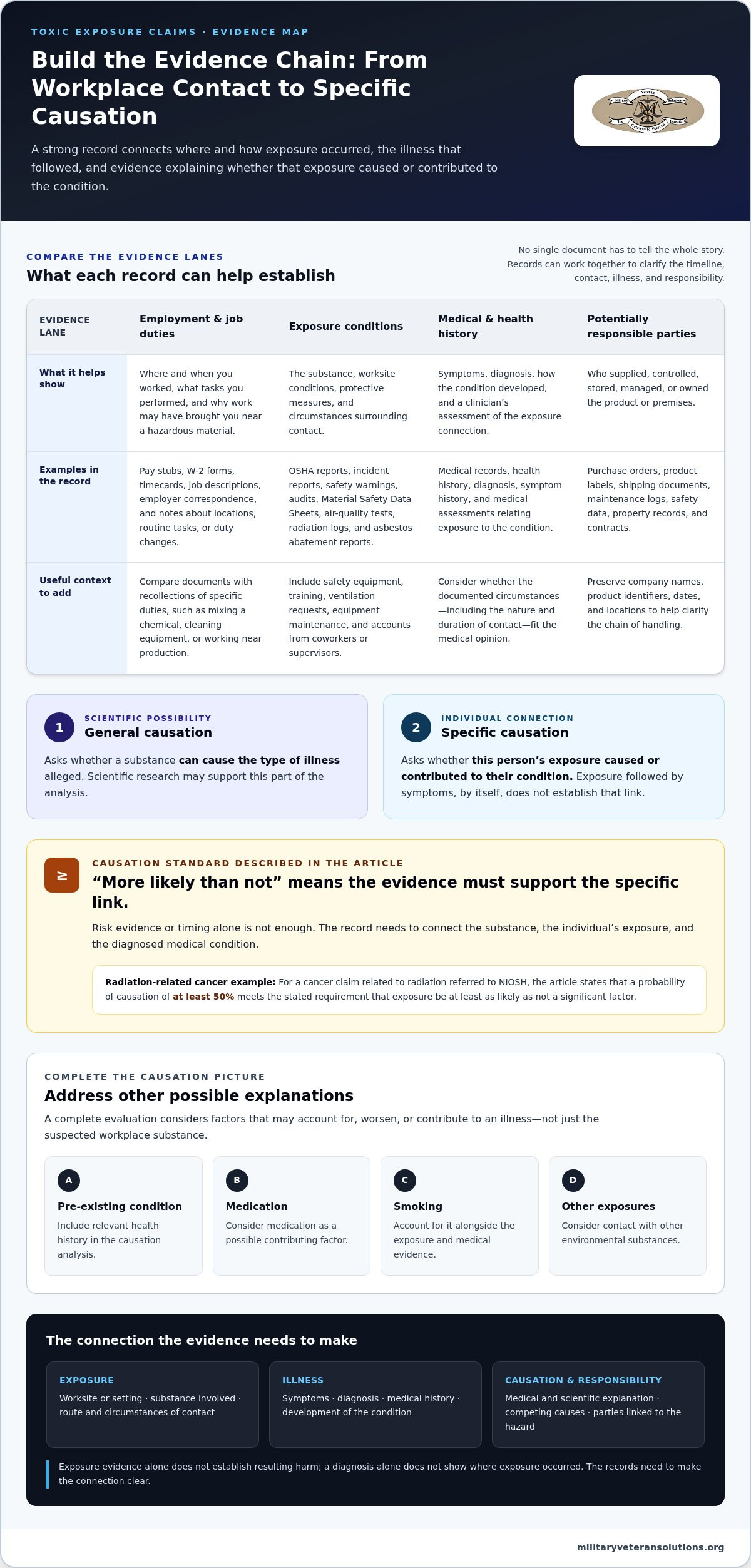
Two causation questions matter. General causation asks whether a substance can cause the type of illness alleged. Specific causation asks whether this person’s exposure caused or contributed to their condition. For example, evidence that a chemical can cause a respiratory illness does not, by itself, establish that the worker’s illness came from that chemical. The claim must connect the substance, the individual’s exposure, and the medical condition.
The Causation Standard
In a toxic tort claim, the at-least-as-likely-as-not standard means the evidence must show that exposure more likely than not caused the specific injury. It matters because evidence of risk or timing alone doesn’t establish causation. For a cancer claim related to radiation referred to NIOSH, a probability of causation of at least 50% meets the stated requirement that exposure be at least as likely as not a significant factor, according to the National Institute for Occupational Safety and Health.
General and specific causation call for different evidence. Scientific research may support the conclusion that a substance can cause a disease, while exposure records and medical assessments address whether it caused this person’s illness. For example, a service member’s record of possible exposure should be considered alongside the diagnosis and medical explanation linking the two.
Alternative Causation Explanations
Alternative explanations are other factors that may account for, worsen, or contribute to an illness. They matter because a claim must do more than identify a possible toxin: the evidence must address competing explanations. A pre-existing condition, medication, smoking, or exposure to another environmental substance may be part of the causation analysis.
Consider a worker diagnosed with a respiratory condition after working around a chemical. The timing may be relevant, but it does not establish that the chemical caused the condition. A complete evaluation considers the person’s health history, other exposures, and the circumstances of workplace contact. Addressing these factors clarifies how well the evidence supports the claimed connection and helps identify gaps that may leave room for another explanation.
Exposure and Medical Causation
Proving exposure and medical causation means documenting both contact with the substance and a medically supported link to the illness. A diagnosis alone does not show where exposure occurred, while evidence of a hazard alone does not establish resulting harm. The records need to make the connection clear.
Exposure evidence can describe the worksite or environmental setting, the substance involved, and the route of contact. Medical evidence can document the diagnosis, symptoms, and clinician’s assessment of how exposure relates to the condition. The explanation is stronger when the documented circumstances, including the nature and duration of contact, fit the medical opinion.
What Documentation Proves Toxic Workplace Exposure?
Useful documentation links your job duties and worksite to a hazardous substance, then records the resulting injury. Employer incident reports, safety audits, chemical warnings, and documents naming manufacturers or suppliers may help identify who could be responsible.
Employment and Job-Duty Records
Employment and job-duty records establish where you worked, when you worked there, and what tasks you performed. Pay stubs, W-2 forms, timecards, job descriptions, and employer correspondence can help build that timeline. Compare each document with your recollection of specific duties, such as mixing a chemical, cleaning equipment, or working near a production area.
Write down job locations, routine tasks, and changes in duties while the details are clear. A timecard may place you on a shift, while a job description may show expected responsibilities. Together, these records can help explain why your work brought you near a hazardous material, even if no single document describes every task or exposure.
Exposure Documentation
Exposure documentation records the substance, workplace conditions, and protective measures surrounding contact. OSHA reports, company incident reports, safety warnings, audits, and Material Safety Data Sheets may identify known hazards or safety failures. Air-quality tests, radiation exposure logs, and asbestos abatement reports can also describe conditions at a worksite.
Include records about safety equipment, training, ventilation requests, and equipment maintenance. For example, a written request for improved ventilation may show that workers raised concerns. Co-worker statements, supervisor accounts, and witness interviews can add context about the tasks performed and whether others observed the same conditions.
Records Identifying Responsible Parties
Records identifying potentially responsible parties link a workplace hazard to the people or businesses that supplied, controlled, or managed it. Purchase orders, product labels, shipping documents, maintenance logs, and safety data may identify a chemical’s manufacturer, supplier, or distributor. Property records and contracts may help identify who owned or managed the premises.
Responsibility may involve more than the employer. A toxic tort investigation may examine manufacturers, distributors, premises owners or lessors, and companies that stored hazardous substances. Preserve documents showing company names, product identifiers, dates, and locations so the chain of handling can be understood.
Discovery involves gathering and exchanging evidence, so organize records by source and date. Keep original files, label copies, and note where each item came from. For example, separate employer correspondence from safety reports and witness statements. This makes gaps easier to spot and helps connect job duties with workplace conditions without treating one document as the whole story.
Document injuries and their effects with medical visit summaries, workers’ compensation filings, health insurance claim decisions, benefit statements, and insurer correspondence. Keep denials and appeals with the related claim records. A dated symptom journal can clarify when problems began, while medical documentation can record diagnoses, test results, and treatment history relevant to the claimed harm.
For veterans organizing service-related evidence, a review of military service records can help bring assignments and documented duties into a clearer timeline.
Expert opinions on exposure and illness
Expert opinions can explain scientific and medical questions that records alone cannot resolve. For readers asking how to prove a toxic exposure claim, qualified experts can assess the substance, exposure circumstances, diagnosed illness, and evidence connecting them.
What Different Experts Can Explain
Each expert offers a distinct perspective. An industrial hygienist evaluates workplace conditions and may address how a substance reached a worker. If exposure is established but the route remains disputed, an industrial hygienist can assess whether contact occurred through inhalation, skin, or another pathway.
A toxicologist can explain a substance’s properties and potential effects. An epidemiologist can discuss patterns observed across groups, while a medical professional can assess an individual’s diagnosis and health history. Occupational medicine reports may connect job conditions with a worker’s illness and its effects on daily activities.
Expert Witness Testimony
Expert witness testimony translates specialized evidence into terms a judge or jury can evaluate. For example, a medical expert may explain how a patient’s test results and clinical history relate to suspected exposure. A toxicologist may discuss whether the substance could cause the type of illness alleged.
Strong testimony explains its reasoning rather than simply announcing a conclusion. An expert can identify the records reviewed, the scientific literature considered, and the assumptions used. If an opinion depends on a particular exposure route or timeline, those details should be clear so the testimony can be compared with workplace and medical evidence.
Connecting the Opinion to the Evidence
Scientific studies and expert opinions from doctors, chemists, or researchers may support a causation argument. Their value depends on how directly they address the substance, the illness, and the facts of the person’s exposure. A study about a chemical’s general effects, for instance, may not establish whether a particular worker’s documented circumstances fit that explanation.
Experts may examine dose and duration rather than treating every exposure as identical. A useful report explains which records support its account and how uncertainties affect its reasoning. Unsupported claims that exposure level is irrelevant can weaken the analysis rather than clarify it.
How Expert Evidence Affects a Claim
Expert opinions can clarify illness, causation, and claimed damages, but they do not replace the underlying evidence. A medical opinion should align with diagnosis records, while an industrial hygiene assessment should fit the available workplace information. If either conflicts with key documents, that disagreement may become central to the lawsuit.
Experts can also help assess alternative explanations, such as another environmental exposure or a pre-existing condition. Their analysis may inform whether the evidence supports the claim that a particular party was responsible. Understanding how to prove a toxic exposure claim means keeping reports, supporting records, and stated assumptions together so the reasoning behind each opinion can be traced.
Exposure records and health-history investigations
Exposure records and health-history investigations bring workplace conditions, medical events, and symptom progression into one timeline. This matters because toxic illnesses can appear months or years after contact, and some emerge years or decades later.
Personal Health Journals and Symptom Logs
A health journal is a dated record of symptoms, visible effects, and changes in daily function. Its entries can help compare symptom timing with exposure records and medical visits. For example, note when coughing began, whether it worsened at work, and which activities became difficult.
Record each episode in plain language, including the symptom, its severity, and what was happening nearby. Add relevant details such as a workplace task, suspected chemical contact, or change in the surrounding environment. A dated photograph can document a visible effect, while a medication list can show what you took and when.
Keep visit summaries and specialist assessments alongside the journal. If a doctor records a diagnosis after you described recurring symptoms, the dated records can show how the condition developed. Consistent entries are more useful than reconstructing a long period from memory, especially when symptoms fluctuate or exposure ended before diagnosis.
Take action by preserving the original entries and adding new ones as symptoms change. Avoid replacing earlier descriptions with revised versions; add a dated note if you need to clarify something. This preserves the sequence and helps distinguish firsthand observations from later explanations about possible contamination or its effects.
Pre-Existing Health Conditions
Pre-existing health conditions are illnesses or symptoms documented before the suspected exposure. They matter because an investigation compares earlier health records with later changes rather than treating every symptom as new. For example, prior lung complaints and later breathing difficulties should be considered together when assessing the full medical history.
Gather records showing the condition’s earlier course, including diagnoses, imaging, laboratory results, and specialist notes. Then organize later records by date to make changes in symptoms, test results, or treatment easier to identify. This comparison can help explain whether health changed after exposure or followed an existing pattern.
Other factors also belong in a health-history review. Medical records can document medication use, lifestyle factors, and other environmental exposures that could contribute to the same illness. Recording these details supports a balanced assessment and helps address alternative explanations without omitting relevant context.
Keep insurance and workers’ compensation paperwork with the medical timeline, including claim filings, denials, appeals, and benefit statements. These records can show when a condition was reported and how it affected work or daily life. Together, dated health records and symptom notes describe both the illness and its practical effects, information relevant to a compensation claim.
Elements of a toxic exposure claim
A toxic exposure claim must connect a hazardous substance, a person’s exposure, resulting harm, and a legally responsible party. These elements work together: evidence that a chemical is dangerous cannot, by itself, establish who caused an individual’s injury.
To establish the claim, the evidence generally needs to show that:
- The substance posed a danger. Scientific evidence can explain the harm toxic substances are capable of causing.
- Exposure occurred. Records or testimony should connect the person to the substance and relevant setting.
- The exposure caused injury. Medical and expert evidence must link the exposure to the diagnosed condition.
- A defendant was responsible. Evidence must connect that party’s conduct or product to the exposure and resulting harm.
Responsibility may involve negligent chemical handling, unsafe disposal, failure to warn, or a dangerous product. Depending on the facts, a claim may rely on negligence, strict liability, or breach of warranty. Identifying the legal basis matters because each theory focuses on different conduct and evidence.
How do toxic exposure claims differ from workers’ compensation claims? Workers’ compensation concerns benefits for a work-related injury, while a toxic tort claim may seek damages from a responsible third party. Depending on the facts, both claims may proceed alongside one another.
A toxic tort lawsuit may involve a manufacturer, distributor, premises owner, or hazardous-substance storage company. For example, employment records might establish where exposure occurred, while product documents identify a supplier. The evidence must connect that party to the exposure, not merely show that the business operated near the affected site.
What are the risks and costs of filing a toxic exposure claim? The evidence may face challenges over causation, alternative exposures, or responsibility, and developing expert opinions takes careful work. Filing deadlines vary by state and may range from one to ten years, so delay can affect the opportunity to bring a claim.
Potential damages may include past and future medical expenses, lost wages or future earnings, and pain and suffering. Records supporting each claimed loss should connect the harm to the illness, such as medical bills for treatment or employment records documenting lost work. A plaintiff’s evidence must support both responsibility and the damages sought.
How can someone find a lawyer for a toxic exposure claim? Look for an attorney who handles toxic tort or product liability cases and can assess exposure records, medical evidence, expert needs, and potentially responsible parties. For those pursuing civil compensation, consulting a qualified personal injury lawyer Miami can provide a focused review of these issues and clarify how the evidence fits the claim.
Veterans addressing a separate VA benefits decision can get help filing a VA appeal; that process is distinct from a civil toxic tort lawsuit.
Military Veteran Solutions: Filing VA appeals
Military Veteran Solutions, LLC helps veterans review VA decisions and pursue appeals when they believe a benefits decision did not fully address their claim. If your concern involves toxic exposure during military service, service records and medical documentation may support a VA disability claim, which is separate from a civil toxic tort lawsuit.
Through Veteran Claims Representation, Military Record Reviews, and VA appeals, Military Veteran Solutions, LLC helps identify issues in the record and support an appeal. This can be a useful next step if you have received a VA decision you disagree with or need help understanding how your service evidence relates to it.
Contact Military Veteran Solutions, LLC to discuss your VA claim or appeal.
Choose the Right Next Step for Your Claim
Understanding how to prove a toxic exposure claim is one part of deciding which process fits your situation. A civil toxic tort claim and a VA disability claim serve different purposes, so keep their records and next steps distinct. If your concern involves a VA decision about service-connected exposure, focus on the decision and the service evidence it considered.
Military Veteran Solutions, LLC supports veterans through Veteran Claims Representation, Military Record Reviews, and VA appeals. Reviewing your VA decision and military records can clarify what the agency addressed and what information may matter to an appeal. This is the appropriate path for VA benefits issues, not a substitute for pursuing a separate civil claim.
Take the next step with the documents you already have, including your VA decision and relevant service records. Contact Military Veteran Solutions, LLC for support with a VA claim or appeal. A clearer understanding of the process can help you move forward with purpose.
Frequently Asked Questions
How Does Someone Prove They Were Injured by a Chemical?
Show both a documented injury and evidence connecting it to the chemical. For example, preserve the product label or container information, record where contact happened, and keep medical records describing the diagnosis and symptoms. A dated incident report or message to a supervisor can help establish when the event was reported. The evidence is strongest when these details tell a consistent story rather than relying on a suspected chemical alone.
What if my illness didn't appear until years after the exposure?
A delayed diagnosis does not automatically rule out a connection, because some toxic exposure illnesses may emerge years or decades after contact. Gather records from before diagnosis, including earlier medical notes and any documentation that helps establish the exposure history. For example, an old work assignment or service record may place you in a setting where exposure could have occurred. A medical assessment can then consider the timeline alongside your health history.
What evidence is needed to prove a toxic exposure claim?
Evidence generally needs to address exposure, illness, causation, responsibility, and resulting harm. Useful material may include dated workplace or service records, product or hazard documents, medical test results, and correspondence showing when concerns were raised. Keep original documents and note who created each record. For instance, a product label may identify a chemical, while a separate record may show where you encountered it; together, they can clarify the claim’s evidence trail.
How do you establish that exposure to a toxic substance caused an illness?
Establish the connection by aligning the exposure circumstances with medical evidence and a reasoned expert explanation. The analysis considers whether the substance can cause the diagnosed condition and whether the person’s documented exposure plausibly explains their individual illness. For example, an expert may compare the exposure timeline with the diagnosis and clinical history. Consider other potential causes as well, so the conclusion addresses competing explanations rather than relying on timing alone.
How can exposure levels, duration, and location be documented?
Use records describing conditions at the relevant place and time, such as exposure logs, air or water testing, shift schedules, site maps, and incident reports. If direct measurements are unavailable, job tasks, work-area descriptions, witness accounts, and records of nearby processes may help reconstruct the circumstances. Keep each item tied to its date and location. An industrial hygienist can assess what the available records indicate about exposure routes and conditions.
What are the legal standards for proving toxic exposure claims in the United States?
In a toxic tort case, a plaintiff generally must prove the claim by a preponderance of the evidence, including that the substance could cause the illness and that exposure caused the individual’s injury. The precise legal requirements depend on the claim and applicable state law. Some federal programs use their own criteria: for Part E claims under the Energy Employees Occupational Illness Compensation Program, “at least as likely as not” means a 50% or greater likelihood that exposure significantly contributed to the illness.