
The VA rates service-connected IBS at 0%, 10%, 20%, or 30%, with 30% the maximum, which requires abdominal pain associated with defecation at least weekly. Establishing service connection for IBS generally requires evidence of a current condition and a link to military service, unless a presumptive route applies. According to the U.S. Department of Veterans Affairs, former prisoners of war held for at least 30 days may qualify for presumptive service connection; the maximum IBS rating requires abdominal pain associated with defecation at least weekly.
A diagnosis is important, but your VA rating also depends on the severity and pattern of your symptoms. If IBS was diagnosed after discharge, that timing alone does not rule out a claim. This guide explains how ratings work, who may qualify through direct, presumptive, or secondary service connection, and what records can support a claim. You’ll also learn how the filing process works and what evidence may shape your next step.
Key Takeaways
- VA IBS ratings range from 0% to 30%; the rating reflects documented symptom severity and frequency, with the maximum requiring abdominal pain associated with defecation at least weekly.
- Presumptive eligibility may apply to some Gulf War veterans and former prisoners of war, while other claims need evidence connecting IBS to service.
- A secondary claim may be supported by a medical diagnosis and evidence linking IBS to an already service-connected condition.
- Symptoms documented after discharge can still matter. Medical records and a clear history of how symptoms affect daily life can help support your case.
- VA Form 21-526EZ is used to file an IBS disability claim, and a decision review may be an option if the VA decision overlooks important evidence.
Is IBS a Presumptive Condition for Service Connection?
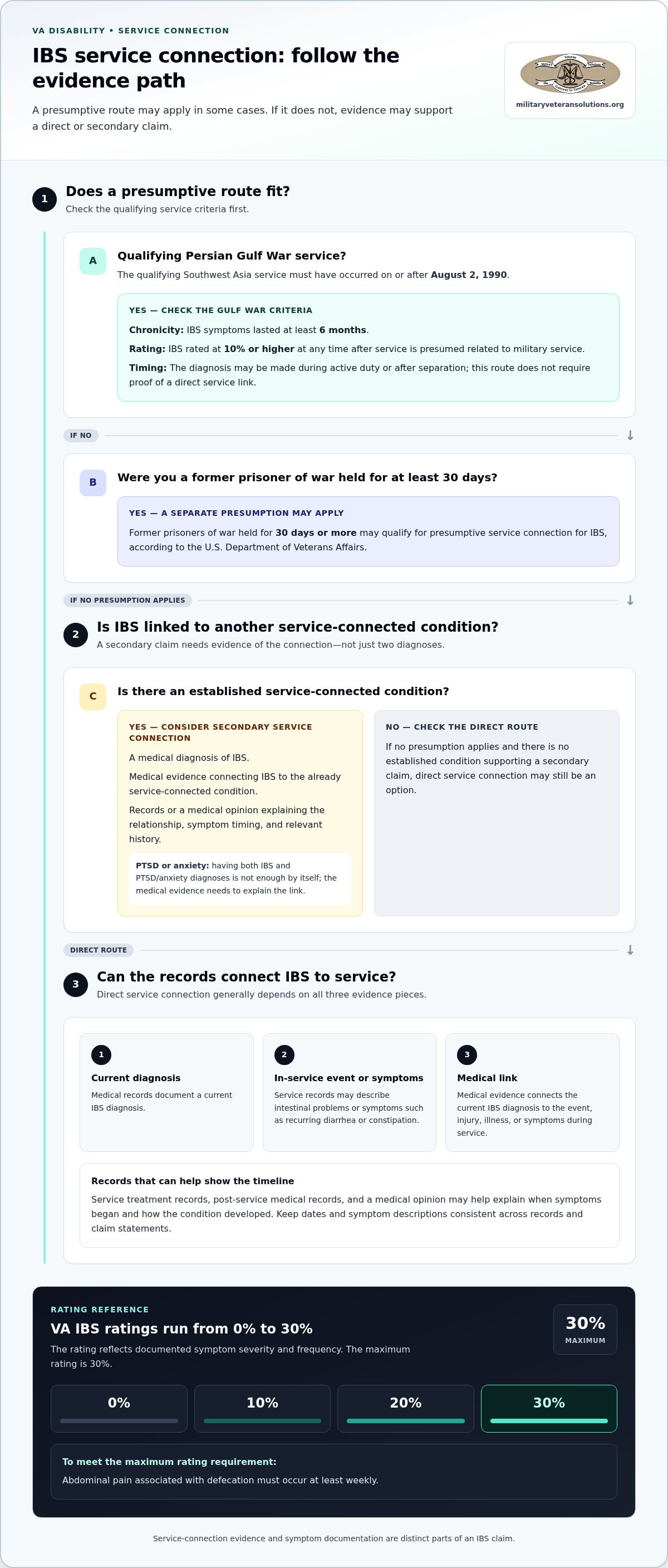
IBS may qualify through a Gulf War presumption or, for some former prisoners of war, a separate presumption. Otherwise, direct service connection generally requires a current diagnosis, an in-service event or symptoms, and medical evidence linking them.
Direct Service Connection Evidence
Direct service connection means showing that IBS began during service or resulted from an event, injury, or illness in service. This route matters when you do not qualify for a presumption. Evidence may include service treatment records describing intestinal problems, post-service medical records documenting continued symptoms, and a current diagnosis. For example, records of recurring diarrhea or constipation during deployment can help establish when symptoms began.
Medical Nexus Evidence
A medical nexus is evidence connecting a current IBS diagnosis to a specific event, injury, or illness during service. A diagnosis alone does not establish that military service caused the condition. Medical records may document the timeline, symptoms, and relevant service history; a medical opinion can explain how those facts support the connection. Keep dates and symptom descriptions consistent across records and claim statements.
The presumptive route can change what evidence is needed. For qualifying Persian Gulf War veterans, federal law and regulation recognize presumptive service connection for medically unexplained chronic multisymptom illnesses under 38 U.S.C. § 1117 and 38 C.F.R. § 3.317. Qualifying Southwest Asia service must have occurred on or after August 2, 1990. Under this route, IBS symptoms must have lasted at least six months. The IBS diagnosis may occur during active duty or after separation, without requiring proof of a direct link to service.
For Gulf War veterans, IBS rated at 10% or higher at any time after service is presumed related to military service. This can matter when symptoms became more clearly documented after discharge. A former POW held for at least 30 days may also receive presumptive service connection for IBS, according to the U.S. Department of Veterans Affairs; the maximum IBS rating requires abdominal pain associated with defecation at least weekly.
Direct service connection remains an option outside the presumptions. To support it, show a current IBS diagnosis, identify the in-service event or symptoms, and provide medical evidence linking the two. Records showing IBS before enlistment may also matter if they document that the condition worsened after service began. Medical records are central evidence, and a symptom timeline can help show how the condition developed.
VA generally doesn’t assign separate individual ratings for both GERD and IBS. It usually assigns one rating for whichever condition has the higher disability rating. Hemorrhoids may receive a separate rating under diagnostic code 7336, depending on their severity. Those distinctions can affect how a VA disability claim describes overlapping digestive symptoms and supporting medical evidence.
Secondary service connection for IBS
Secondary service connection may apply when IBS is linked to a condition the VA has already service-connected. The claim needs a medical diagnosis of IBS and medical evidence connecting it to that established condition. This is different from a Gulf War presumptive claim, which relies on qualifying service and the criteria for the presumption.
IBS secondary to PTSD or anxiety
PTSD is one possible condition raised in secondary IBS claims. Having both diagnoses is not enough by itself: medical evidence needs to explain the relationship between the service-connected condition and IBS. Records can show when bloating, abdominal pain, or bowel distress began, how symptoms changed, and how they relate to PTSD or anxiety.
A veteran who served in the Army from 1966 to 1969 filed a claim in 2003 for IBS secondary to service-connected PTSD, and the VA granted service connection. The example shows that a secondary claim can be considered through the evidence linking the conditions. It doesn’t mean that every veteran with PTSD and IBS automatically qualifies.
Hemorrhoids and IBS
Hemorrhoids and IBS may appear in the same digestive-health history, but one diagnosis alone does not establish that the other condition is secondary. If claiming hemorrhoids as secondary to IBS, identify medical evidence explaining the relationship. Keep records documenting both diagnoses, symptom timing, and any medical discussion of how one condition affects the other.
The VA rates hemorrhoids under diagnostic code 7336, with ratings of 0%, 10%, or 20%, depending on severity. A separate hemorrhoid rating may be available, up to 20%. That rating question is distinct from proving a secondary relationship, so describe each condition and its supporting evidence clearly.
Organize the claim around the connection, not just a list of symptoms. Include the VA decision showing which condition is already service-connected, medical records diagnosing IBS, and relevant treatment notes or medical opinions. For example, a clinician’s explanation of your PTSD history and IBS symptoms addresses the claimed link more directly than records listing both conditions without discussing their relationship.
Keep the evidence consistent. Compare treatment dates, symptom descriptions, and the history given to medical providers. If the VA denies the claim, review the decision to see whether it addressed the diagnosis and medical link. Veteran Claims Representation can help veterans examine claim evidence and VA decisions when a secondary IBS claim needs focused review.
IBS symptoms and their relationship to military service
A claim needs a current IBS diagnosis and evidence connecting the disorder to military service. Records of abdominal pain, diarrhea, constipation, and when they began can help show the condition’s history. Medical evidence should also explain the relationship to service, rather than merely list symptoms.
Symptoms matter in two ways: they help document the diagnosis and show how IBS affects daily life. Describe what happens during an episode, such as urgent bowel movements, abdominal distress, or pain that disrupts travel or work. A specific example is more useful than a general statement that symptoms are severe. Note which activity was affected and how symptoms changed your plans.
Service-related patterns can provide context. Many members of the Armed Forces have IBS, and approximately 14% of Gulf War veterans are affected. These figures do not establish an individual claim. Your own service records, medical history, and evidence connecting your IBS to service remain central to your case.
Private medical records from outside your service period can help show symptom severity, but they do not establish service connection by themselves. For a secondary claim, evidence must link IBS to another service-connected condition. For example, a civilian treatment note documenting recurring abdominal pain may help show the condition’s course, while a medical explanation of its relationship to a service-connected disability addresses the link.
A symptom diary can make changes and frequency easier to understand. Record the date, symptoms, their effect on daily activities, and any missed obligations. The VA rating criteria assess symptom frequency over the preceding three months, so a diary covering that period can help you organize a clear account. Keep entries factual and consistent with treatment records.
Before a C&P examination, prepare a concise account of how symptoms affect everyday activities. Include concrete examples, such as canceling an appointment or being unable to complete a planned trip. Specific details help explain the practical impact behind a symptom description.
Long-term records can clarify whether IBS is chronic and how its severity changes. Keep private treatment notes, service medical records, and diary entries together. If anxiety appears in your medical history, note when it was documented and how symptoms were described, without assuming anxiety alone proves a connection. A clear timeline helps distinguish the diagnosis, severity, and evidence relating IBS to service.
IBS diagnosed after military service
A diagnosis made after discharge can still support a VA disability claim. The key is connecting the current intestinal disorder to military service, rather than assuming the diagnosis date decides eligibility. For veterans outside a presumptive category, records showing symptoms during service, an in-service event, and a medical link can help establish that connection. A diagnosis during service or within one year after discharge may also support a claim.
VA rates irritable bowel syndrome under Diagnostic Code 7319. Updated IBS rating criteria took effect May 19, 2024. The criteria focus on abdominal pain associated with defecation and the frequency of symptoms. That means records should describe more than a diagnosis: they should show when pain occurs, how often it happens, and whether diarrhea or constipation accompanies it.
According to the U.S. Department of Veterans Affairs, the maximum 30 percent rating requires abdominal pain associated with defecation on at least one day per week during the previous three months. This frequency threshold gives veterans a concrete way to compare documented symptoms with the rating criteria. A symptom diary and treatment notes can help capture the pattern over time.
The described criteria also distinguish lower ratings by symptom frequency. A 20 percent rating requires abdominal pain associated with defecation at least three times per month for the previous three months. A 10 percent rating requires that pain at least once a month during the previous three months. The VA assigns a 0 percent rating when the criteria for a compensable rating aren’t met.
Build the record around both timing and severity. For example, a veteran diagnosed after separation can gather clinic notes, medication history, and personal records describing symptoms during service. Each record should make the timeline clear: when symptoms began, whether they continued after discharge, and when a clinician diagnosed IBS. Medical documentation can support severity, while an explanation linking the condition to service addresses eligibility.
Keep rating evidence distinct from service-connection evidence. A diary describing frequent abdominal pain may help show severity under DC 7319, but it doesn’t, by itself, explain why IBS is related to service. Likewise, a medical opinion connecting IBS to an in-service illness may address the service link without fully describing rating-level symptoms. Veterans reviewing a denial should compare the VA decision with both parts of the record before considering an appeal.
Filing a VA disability claim for IBS
A strong IBS claim organizes the diagnosis, service connection theory, and evidence of symptom severity. Make clear whether the claim is direct, presumptive, or secondary.
Preparing an IBS Disability Claim
Preparing a claim means presenting the VA with a clear account of your IBS diagnosis and its relationship to service. Evidence of diarrhea or abdominal pain supports the condition’s history, while separate evidence may establish the service connection. Before filing, create a timeline using service records, medical notes, and symptom details. If claiming IBS as secondary, identify the condition already service-connected.
Claim Forms and Supporting Evidence
Veterans file an IBS disability claim using VA Form 21-526EZ. This form begins the claim, while supporting records help explain the diagnosis, service connection theory, and requested disability benefits. Gather relevant service and medical records, diagnosis information, and a symptom history. For a secondary claim, include evidence connecting IBS to the existing service-connected condition.
Make the evidence easy to follow. Group records by purpose: diagnosis, symptoms, and connection to service. A treatment note may document IBS, while a service record or medical opinion may help explain the connection. A diary can add detail about diarrhea, abdominal pain, and the effect symptoms have on daily life. Keep dates and descriptions consistent across documents.
After submitting a claim, you have one year to gather supporting information. Use that time to identify relevant records and add evidence that clarifies gaps in the timeline. If your diagnosis came after discharge, explain how earlier symptoms or an in-service event relate to later medical findings. For a secondary claim, focus evidence on the relationship between IBS and the service-connected condition.
A VA Compensation and Pension examination may form part of the evaluation. An IBS examination usually lasts about 15-20 minutes, though it can range from five minutes to several hours. Prepare a concise account of symptom frequency, diarrhea or constipation patterns, and functional impact. Specific examples help distinguish occasional disruption from symptoms that repeatedly interfere with ordinary activities.
Keep rating evidence distinct from connection evidence. The first describes how IBS affects you; the second explains why the condition is related to service. If a VA decision overlooks records or does not address the claimed connection, review the decision and consider whether an appeal is appropriate. Get support reviewing a VA claim or appeal.
Military Veteran Solutions: Filing VA appeals
Military Veteran Solutions, LLC helps veterans address unfavorable IBS decisions through VA Decision Letter Analysis and filing VA appeals. If the VA overlooked medical records, misunderstood the claimed service connection, or assigned a rating that does not reflect documented symptoms, a focused review can clarify what the decision addressed and where the evidence may need attention.
Veteran Claims Representation and Military Record Reviews can also help veterans assess the records and reasoning relevant to a claim or appeal. This support is for navigating VA benefits decisions, not medical treatment. If you’d like help reviewing your VA decision, contact Military Veteran Solutions, LLC.
Take the Next Step With a Clear Claim Strategy
Your next step is to make the record tell a coherent story. Compare your VA decision, medical history, and service records. Note unanswered questions, such as whether the decision addressed a medical opinion or fully considered the evidence you submitted. This focused review can help you identify what needs attention before moving forward with a claim or appeal.
Building a service connection for IBS claim takes more than collecting documents; the evidence must support the specific basis for your claim. Military Veteran Solutions offers VA Decision Letter Analysis, Military Record Reviews, Veteran Claims Representation, and filing VA appeals. These services can help you examine the decision and organize the record around the issues that matter.
Contact Military Veteran Solutions to discuss your VA claim. Take the next step with a clearer understanding of your options and the evidence behind your case.
Frequently Asked Questions
How Does the VA Rate IBS?
The VA rates IBS based on the documented frequency and severity of symptoms, including abdominal pain associated with defecation. The rating levels are 0%, 10%, 20%, and 30%. To prepare for evaluation, describe symptom patterns clearly and consistently across treatment records, examination responses, and any diary; the maximum IBS rating requires abdominal pain associated with defecation at least weekly. For instance, explain whether pain occurs with bowel movements and how diarrhea or constipation affects ordinary activities.
VA Denied My IBS Claim, What Do I Do?
Start by reading the VA decision letter closely and identifying the reason for denial. Check whether it addresses your diagnosis, the claimed connection to service, and the records you submitted. Then compare that explanation with the evidence in your file. If relevant service or medical records were overlooked, organize them around the issue identified in the letter before pursuing a review or appeal.
Can I Get a Rating Without an In-Service Diagnosis?
Yes. An IBS diagnosis after discharge does not automatically prevent a rating, but the claim still needs a supported path to service connection. A medical timeline can help show how symptoms began, changed, and led to a later diagnosis. Post-service treatment notes, for example, may be considered alongside service records describing earlier digestive problems and medical evidence explaining how the condition relates to service.
Could the way your IBS symptoms are documented affect your disability rating?
Yes. Clear, consistent documentation helps show the frequency and impact of symptoms relevant to the rating. Instead of writing only “stomach problems,” record what happened, when it occurred, and whether pain accompanied a bowel movement. Describe practical effects, such as leaving an appointment early or changing plans because of urgent diarrhea. Keep your account consistent with clinical notes and examination responses.
How Do I Establish a VA Disability Claim for IBS?
Present a current diagnosis and explain the basis for connecting IBS to service. For a direct claim, organize evidence around the in-service event or symptoms and medical evidence relating them to your diagnosis. For a secondary claim, identify the condition already service-connected and provide evidence connecting it to IBS. A clear written timeline can help the VA understand how the evidence fits together.
How to Obtain VA Disability Compensation for IBS?
Submit an IBS claim using VA Form 21-526EZ and provide records supporting both the service connection theory and symptom severity. Include relevant service documents, diagnosis and treatment records, and a symptom history that matches the medical record. If the VA grants service connection, the assigned disability rating determines the level of compensation. If the decision misses important evidence, review its stated reasons and consider an appeal.
Can IBS be service-connected as a Gulf War presumptive condition?
Yes. The Gulf War presumption may apply when a veteran meets the qualifying service and IBS criteria. For the route described, qualifying Southwest Asia service must have occurred on or after August 2, 1990, and symptoms must have lasted at least six months. A diagnosis may occur during active duty or after separation. Keep records that establish service history, diagnosis, and the duration of symptoms.
Which veterans qualify for presumptive service connection for IBS under the PACT Act or Gulf War rules?
Gulf War rules may cover qualifying veterans with Southwest Asia service on or after August 2, 1990, when the IBS criteria are met. Former POWs held for at least 30 days may also qualify, according to the U.S. Department of Veterans Affairs; the maximum IBS rating requires abdominal pain associated with defecation at least weekly. The PACT Act became law in 2022, but veterans should assess IBS eligibility against the applicable Gulf War or POW criteria.