
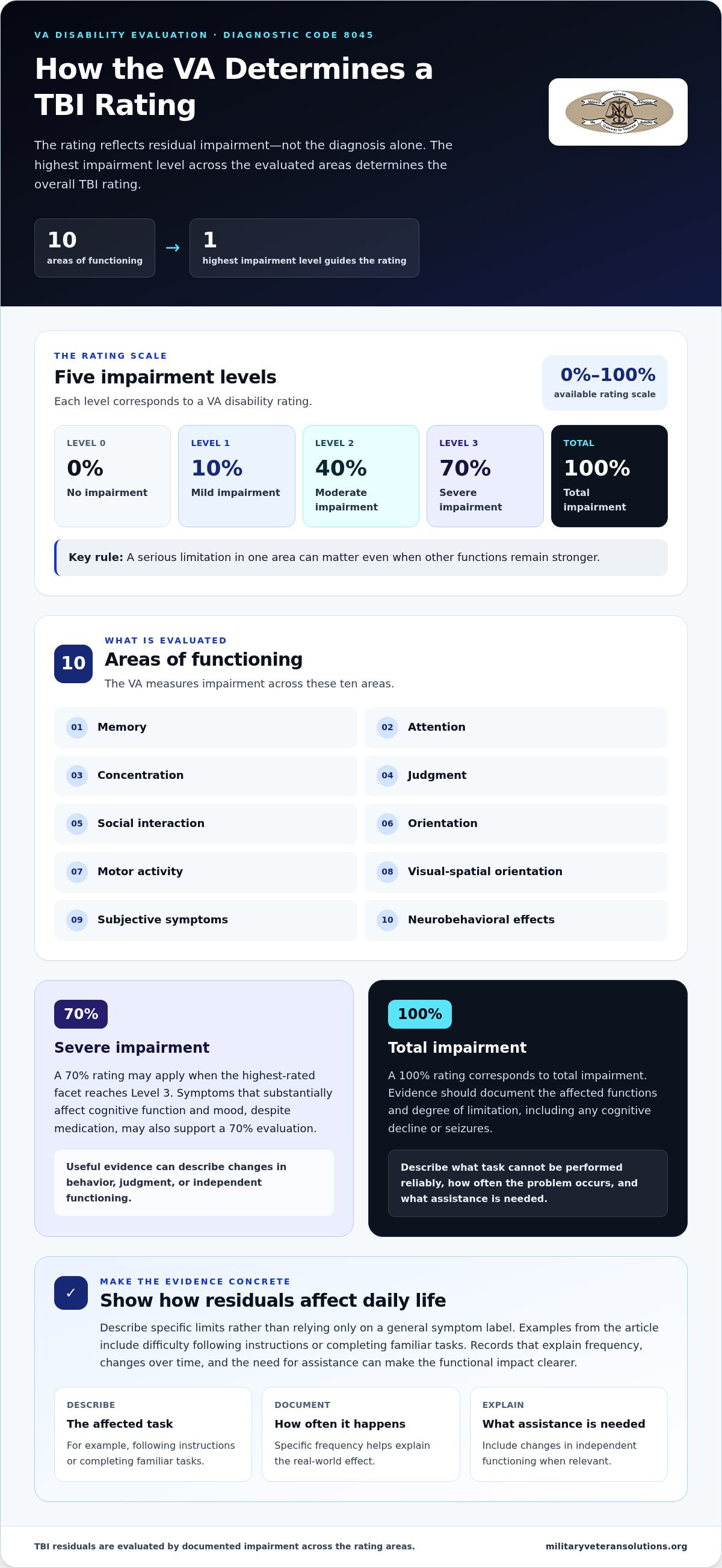
The VA doesn’t rate traumatic brain injury by diagnosis alone. For VA disability for traumatic brain injury (TBI), it evaluates the condition’s residual effects under Diagnostic Code 8045, according to the Office of the Federal Register. The rating scale is 0%, 10%, 40%, 70%, or 100%, with the highest impairment level across the evaluated areas determining the overall TBI rating.
If the process feels difficult to pin down, you’re not alone: TBI can affect memory, mood, and physical functioning, and those effects may overlap with other conditions. The key is understanding how the VA evaluates the evidence and distinguishes TBI residuals.
This guide explains how TBI ratings work, when to consider a claim, and which service, medical, and personal records may help show how the injury affects daily life. It also covers potential secondary conditions and what to understand when TBI symptoms overlap with other diagnoses.
Key Takeaways
- The VA evaluates TBI through its residual effects, and the highest impairment level across the rating areas can shape the overall rating.
- Some conditions may qualify for secondary service connection when evidence supports their relationship to a service-connected TBI; certain presumptions have specific criteria and time limits.
- Service records, medical documentation, and clear descriptions of how symptoms affect daily life can help support a claim.
- Separate ratings may apply to distinct residuals, while overlapping symptoms require careful evaluation to avoid counting the same impairment twice.
- A review of the VA decision and supporting records can help identify whether an appeal or other claims representation may be an appropriate next step.
Can Veterans Get Secondary Service Connection for Conditions Caused by TBIs?
Yes. A veteran may receive secondary service connection when evidence connects a current condition to a service-connected TBI. VA regulations also presume service connection for five diseases when precipitated by one. Separate ratings for TBI and PTSD may apply to distinct effects, but VA cannot count the same symptom twice.
Service-Related Risk Factors
Service-related risk factors include events during military duty that can cause a sudden jolt or blow to the head and brain damage. Examples include combat-related explosions, projectile impacts, and accidents during training or active duty. While civilian head trauma from vehicle accidents or third-party negligence involves personal injury litigation through resources like mcguireinjurylaw.com, VA disability claims require establishing an in-service nexus rather than civil liability. Connecting the event to current symptoms matters: the claim must establish a relationship between the veteran’s service, the TBI, and any claimed secondary condition.
TBI symptoms can affect physical, cognitive, and emotional functioning. Examples include headaches, dizziness, nausea, fatigue, sleep problems, and sensitivity to light or sound. A veteran may also experience memory problems, confusion, slowed thinking, difficulty concentrating, or trouble making decisions. Mood swings, irritability, depression, anxiety, and personality changes can occur as well. Describe specific changes, such as difficulty remembering appointments or managing routine tasks, rather than relying only on a general symptom label.
Overlapping Mental Health Symptoms
Symptoms of TBI can overlap with those of mental health conditions such as PTSD. Irritability, concentration problems, sleep disturbance, and memory difficulty may make it harder to distinguish each condition’s effects. For a claim and its evaluation, explain when symptoms began, how they changed, and how they affect daily functioning. VA may rate separate conditions, but it cannot count a shared symptom twice.
Secondary conditions may follow different rules. The U.S. Department of Veterans Affairs describes dementia as presumed connected to a service-related TBI when it occurs within 15 years of a moderate to severe TBI diagnosis. Hormone deficiency diseases may also be presumed service-connected when diagnosed within 12 months of a moderate or severe TBI. For other conditions, evidence must support the link to the service-connected injury; medical records can document the diagnosis, timing, and relationship.
Consider the practical consequences, too. According to the U.S. Department of Veterans Affairs, veterans with a VA disability rating of 30 percent or higher can receive benefits for eligible dependents. Veterans unable to secure and maintain substantially gainful employment because of TBI may qualify for TDIU and be compensated at the 100 percent rate, even without a 100 percent schedular rating, according to the U.S. Department of Veterans Affairs. These benefits have distinct criteria, so records should show how TBI residuals affect employment or family circumstances.
Should Veterans Submit a VA Claim for TBI or Residuals?
Consider a claim when a service-related TBI or its continuing effects interfere with daily life, work, or relationships. VA evaluates impairment across multiple areas, so records should describe specific effects, not just name the injury.
TBI Rating Criteria and Impairment Areas
The TBI criteria measure the severity of impairment across 10 areas of functioning. These include memory, attention, concentration, judgment, social interaction, orientation, motor activity, visual-spatial orientation, subjective symptoms, and neurobehavioral effects. The VA uses the highest impairment level among the areas to determine the overall TBI rating. For a veteran, this means a serious limitation in one area can matter even when other functions remain stronger.
Ratings for TBI Residuals
VA’s TBI impairment scale uses levels 0, 1, 2, 3, or total, corresponding to ratings of 0%, 10%, 40%, 70%, or 100%. Level 0 reflects no impairment, while level 1 reflects mild impairment. Level 2 represents moderate impairment, and level 3 represents severe impairment. A total impairment level corresponds to 100%. These distinctions help explain why a diagnosis alone doesn’t establish a particular disability rating.
TBI ratings can vary with the severity of impairment and the effects of residuals such as cognitive difficulties or seizures. The assigned level depends on documented effects, not simply whether the injury occurred during combat. Describe concrete limits, such as difficulty following instructions or completing familiar tasks, to clarify how residuals affect daily functioning.
Evidence for Higher TBI Ratings
Evidence for a higher rating shows the severity and frequency of impairment in the affected areas. A 70% rating may apply when the highest-rated facet reaches level 3. Symptoms that substantially affect cognitive function and mood, despite medication, may also support a 70% evaluation. Records that describe changes in behavior, judgment, or independent functioning can help show the real-world effects behind clinical findings.
A 100% rating corresponds to total impairment. Evidence should clearly document the affected functions and the degree of limitation, including any cognitive decline or seizures. Keep examples specific: explain what task the veteran can no longer perform reliably, how often the problem occurs, and what assistance is needed. This gives the evaluation a clearer picture than broad descriptions such as “severe symptoms.”
Cognitive, Emotional, and Physical Residuals
Cognitive residuals include problems with memory, attention, concentration, or judgment. Emotional and behavioral effects can include mood changes and difficulty with social interaction. Physical residuals may include balance or motor difficulties, visual-spatial problems, and headaches. VA evaluates these effects across impairment areas, while distinct conditions may receive separate evaluations under applicable criteria. Identify each residual and explain how it limits functioning.
Headaches linked to TBI may be evaluated separately under migraine criteria. A 10% rating may apply to characteristic prostrating attacks averaging one in two months over at least several months. Ratings may reach 30% as headache frequency and severity increase. Track attack patterns and their practical impact, such as missed work or the need to stop routine activities.
If the rating decision overlooks documented impairment or applies the criteria incorrectly, Veteran Claims Representation can help assess the decision and whether an appeal fits your circumstances.
Filing a VA disability claim and medical records
A TBI claim should connect the service event, current diagnosis, and lasting effects with organized evidence. Relevant records can help clarify symptoms such as memory loss, depression, or difficulty maintaining social relationships.
Claim Forms and Supporting Evidence
VA Form 21-526EZ is the general application for disability compensation and related compensation benefits. VA Form 21-4138 is the Statement in Support of Claim, which veterans can use to explain relevant facts in their own words. These forms matter because they identify the claimed condition and give context to supporting records.
Evidence may include service records documenting an injury, medical records showing a diagnosis, and statements describing ongoing effects. For example, explain when memory problems began and how they interfere with appointments or work. A family member can describe observable changes, such as increased irritability or withdrawal from social activities. Keep each statement focused on firsthand details.
Veterans may seek claims assistance through organizations or prepare materials independently. Assistance can help organize forms and evidence, but the claim still needs records supporting the reported injury and its effects. An advocate can help present the case, while the veteran’s symptoms, treatment history, and functional limitations still need to be documented.
Medical Records for TBI Claims
Medical records establish the diagnosis and help show how TBI symptoms developed or changed over time. Relevant documentation may include emergency care after an injury, follow-up visits, neurological assessments, and treatment notes describing concentration problems, headaches, or depression. A timeline can help connect these records to the claimed condition.
Review records for missing context before filing. A note mentioning headaches, for instance, may not explain their frequency or effect on daily tasks. A personal statement can add that detail without replacing clinical documentation. Include records that show continuing symptoms and changes in functioning, such as difficulty completing familiar duties or managing routine responsibilities.
C&P Examinations
A Compensation and Pension (C&P) examination helps the VA evaluate a claimed disability and its effects. If you have an examination scheduled, describe symptoms clearly and give concrete examples from daily life. Explain how often a problem occurs, what makes it worse, and whether it disrupts work, relationships, or routine activities.
Give an accurate account of the injury and symptom history, including relevant treatment and medication information. Don’t minimize or overstate symptoms. If memory difficulties make details hard to recall, written notes can help keep your account consistent with medical records. The examination is one part of the evaluation, so your account should align with the evidence submitted with the claim.
An initial VA disability decision can take 4-6 months, depending on claim complexity. Before submission, compare the forms, medical records, and personal statements for consistency. If the VA decision later overlooks relevant evidence, a review of the decision and records can help identify whether filing an appeal is an appropriate next step.
How Does VA Rate a Traumatic Brain Injury (TBI)?
The VA evaluates TBI through documented residuals, not the injury label alone. The assessment considers the injury’s severity and how its continuing effects impair daily functioning.
Initial Severity Assessment
An initial severity assessment classifies the injury using clinical findings, including the Glasgow Coma Scale. A mild TBI corresponds to a score of 13-15, a moderate TBI to 9-12, and a severe TBI to 3-8. These ranges describe the initial injury, while a VA disability for traumatic brain injury (TBI) also depends on current residual impairment.
Not every head injury causes a TBI, and symptoms may not be obvious immediately. Health care professionals may use neurological examinations, CT or MRI imaging, and cognitive assessments to evaluate a possible brain injury. Records might document an impact, confusion afterward, and later concentration problems. Together, these details help clarify the diagnosis and symptom history.
Moderate or severe TBI can involve loss of consciousness lasting minutes, hours, or longer. That history can inform severity assessment, but current effects matter too. Keep records describing the injury and later changes, such as memory difficulties or trouble completing familiar tasks. This timeline can help show how the condition developed.
Diagnostic Code 8045
The VA evaluates traumatic brain injury under Diagnostic Code 8045, according to the Office of the Federal Register. This code addresses cognitive impairment and other residuals not otherwise classified. The rating considers functional effects across 10 subcategories, including memory, judgment, social interaction, orientation, motor activity, and subjective symptoms.
Under the described impairment scale, levels 0, 1, 2, 3, or total correspond to ratings of 0%, 10%, 40%, 70%, or 100%. The highest impairment level among evaluated areas determines the overall TBI rating. A VA disability for traumatic brain injury (TBI) may therefore reflect the most impaired facet, even when other functions remain less affected.
The evaluation focuses on impairment. Mild effects may include occasional difficulty with attention or concentration. Moderate impairment can affect daily activities and work, while severe impairment may involve substantial limits in cognitive function or mood. Objective testing and specific examples can show how these effects limit functioning.
Physical, cognitive, and mental health residuals may require different evaluations. Headaches, for example, may be considered under applicable criteria for that condition, while cognitive effects remain part of the TBI assessment. Depending on symptoms, treatment may include medication, physical or occupational therapy, and cognitive rehabilitation. Treatment records can document how residuals develop and respond to care, while specialized practices like injuryconsulting.com offer insight into physical therapy assessments and life care planning for ongoing rehabilitation needs.
A 100% evaluation corresponds to total impairment on the described scale. Evidence should identify affected functions and explain their real-life consequences, such as needing help with routine tasks or being unable to make decisions independently. A severe TBI diagnosis alone doesn’t describe those effects. Clinical findings and functional examples provide important context.
How does the VA rate cognitive, emotional, and physical TBI residuals
The VA evaluates cognitive, emotional, and physical effects through documented impairment, not symptoms in isolation. Under 38 CFR § 4.124a, the TBI framework considers cognitive impairment and other residuals, while applicable mental disorder criteria appear in 38 CFR § 4.130.
Cognitive residuals include memory loss, reduced attention, and trouble concentrating. Mild memory loss or reduced attention or concentration warrants a 10% TBI rating under the described criteria. The VA also considers judgment, orientation, and how these limitations affect everyday tasks. For example, records describing repeated difficulty following familiar instructions can make the functional effect clearer than a diagnosis alone.
Emotional and behavioral residuals can involve mood changes, irritability, or altered social interaction. TBI-related cognitive, behavioral, or mood symptoms that occur occasionally and can be managed with medication may warrant a 10% rating. More substantial effects require evidence showing their frequency and impact. Treatment notes, examination findings, and specific examples can show whether symptoms disrupt relationships, decision-making, or routine responsibilities.
Physical residuals may include headaches, dizziness, balance problems, or sensitivity to light and sound. The VA considers how each symptom affects functioning and whether it is evaluated as part of TBI or as a distinct residual. For example, migraine headaches may be assessed under applicable headache criteria. Keep records describing headache frequency, severity, and resulting limits, such as needing to stop an activity.
The TBI evaluation considers 10 subcategories of functioning, and the highest impairment level among them determines the overall TBI rating. A veteran may have mild memory impairment but more serious limitations in another area. Document each distinct effect rather than describing all symptoms as one general problem. This helps show where impairment occurs and how it changes daily functioning.
Some symptoms overlap with PTSD or another mental health condition. VA does not count the same symptom twice when rating TBI and PTSD. If concentration difficulty appears in both evaluations, for example, the evidence should clarify its effects without treating one limitation as two separate impairments. Document distinct symptoms and separately diagnosed residuals clearly.
Compare the decision’s explanation with the medical findings and the functional effects described in your records. If the VA decision appears to overlook a documented cognitive, emotional, or physical residual, get help reviewing your TBI rating decision.
Military Veteran Solutions: Filing VA appeals
Military Veteran Solutions can help when a VA decision doesn’t reflect the TBI evidence or documented residuals in your claim. Its VA Decision Letter Analysis and Military Record Reviews can help identify overlooked records, rating issues, or gaps relevant to an appeal. When you’re challenging a decision, the firm offers Veteran Claims Representation and filing VA appeals. These services focus on your VA claim and the evidence supporting it, not medical treatment. A useful next step is to gather the decision letter and records connected to the injury and its effects. That gives the review a clear foundation. If you’re ready to discuss your VA claim, contact Military Veteran Solutions.
Make Your Next Claim Decision With Confidence
Building a strong case for VA disability for traumatic brain injury (TBI) starts with a clear picture of what the record shows and what the decision addressed. Before taking your next step, organize the relevant VA decision, service records, and medical documentation. Note any symptoms or residuals the decision does not appear to address, and identify evidence that may clarify them. This gives you a focused basis for deciding whether to pursue a claim review or appeal.
Military Veteran Solutions provides Military Record Reviews, Veteran Claims Representation, and filing VA appeals. The firm reviews records and decisions with veterans to help them consider an appropriate path forward. Its free initial consultation is a practical next step for discussing your claim.
Take the next step at your pace. Explore VA claims and appeal support and move forward with a clearer plan.
Frequently Asked Questions
What Do You Need for a TBI VA Rating?
You need evidence connecting the TBI to service, a current disability or residual, and information showing its functional effects. Relevant records can include service documentation, a medical diagnosis, and treatment notes. Add a personal statement with specific examples, such as needing reminders for routine tasks or struggling to follow conversations. If records use different terms for the same symptoms, explain the timeline and how those effects continue.
Can My TBI Qualify Me for Special Monthly Compensation (SMC)?
Yes, severe TBI residuals may qualify for Special Monthly Compensation under SMC(t) when the veteran needs regular in-home aid and attendance for daily activities due to the TBI and would otherwise require institutional care. Evidence should describe the assistance needed and connect it to TBI residuals. Records and firsthand statements, for example, can explain which daily activities require regular help and why independent living is not possible.
How Are TBIs Diagnosed?
Health care professionals may diagnose TBI using neurological examinations, CT or MRI imaging, and cognitive assessments. The evaluation can consider the injury history alongside findings such as memory or concentration difficulties. A scan is only one part of the clinical picture; describe symptoms and changes in functioning to the treating professional. Records from emergency care, follow-up visits, and cognitive testing can help preserve a clearer account of the injury and its effects.
What Are Common Residuals of TBIs?
Common residuals include physical symptoms such as headaches, dizziness, fatigue, nausea, and sensitivity to light or sound. Cognitive effects can include memory problems, confusion, slowed thinking, and difficulty concentrating or making decisions. Mood swings, irritability, anxiety, depression, and personality changes may also occur. Keep a symptom record noting concrete effects, such as losing track of conversations or needing to stop an activity because of a headache.
What Are Compensation & Pension Exams Like for TBIs?
A Compensation and Pension examination gathers information to evaluate the claimed TBI and its residual effects. Be ready to describe the injury history, symptoms, and how they affect ordinary activities. For example, explain what happens when you try to read, manage appointments, or complete familiar tasks. If symptoms vary, describe both better and worse days. Bring relevant notes so memory problems do not make it harder to give a complete account.
What Are TBI Residuals (The Lingering Symptoms)?
TBI residuals are ongoing effects that remain after the initial injury, rather than the injury event itself. They can involve thinking, mood, behavior, or physical functioning. A veteran might have persistent difficulty remembering instructions, feel unusually irritable, or experience recurring headaches. Note when each effect occurs and what it prevents you from doing. This record can help distinguish a continuing limitation from a symptom that appeared only briefly after the injury.
How does the VA rate traumatic brain injury (TBI) for disability?
The VA evaluates TBI residuals across 10 subcategories of functioning, and the highest impairment level determines the overall rating. The scale corresponds to 0%, 10%, 40%, 70%, or 100%. A rating decision should identify the impairment findings it relied on. Compare those findings with the documented effects in your records, especially if one area, such as judgment or memory, appears more impaired than the decision describes.
What are the VA TBI rating criteria and percentage levels?
The VA’s TBI criteria use impairment levels of 0, 1, 2, 3, or total, corresponding to ratings of 0%, 10%, 40%, 70%, or 100%. Level 0 reflects no impairment, while total impairment corresponds to the highest level. The scale evaluates separate functional areas, so review the decision’s discussion of each area. A documented limitation in one area can shape the overall rating when it is the highest impairment level.