
You might think that filing your own VA claim or working with a free service is the fastest path to the benefits you've earned, but for many veterans, it's actually the quickest way to end up in a years-long backlog. With the VA processing over 2 million claims in 2026, it's easy to feel like just another number in a massive, impersonal machine. If you've opened a decision letter only to be met with confusing jargon or a flat denial, you know the frustration of the system firsthand. Professional veteran advocacy services offer a different approach. They move beyond simple paperwork to provide a forensic look at your medical history and military records.
We understand the fear of missing a critical one-year appeal deadline or failing to provide the exact evidence the VA demands. It's exhausting to fight for a service connection that should be obvious. This comparison guide will show you how professional advocacy compares to filing alone or using a VSO, giving you the clarity needed to secure the higher disability rating you deserve. We'll examine the "missing link" of decision letter analysis and show you how a veteran-to-veteran connection can turn a frustrating denial into a successful outcome.
Key Takeaways
- Understand why the 2026 surge in VA claims makes specialized representation more critical than ever for securing the benefits you've earned.
- Learn how professional veteran advocacy services use forensic record reviews to uncover the medical "nexus" often missed by standard filing methods.
- Compare the strengths and limitations of VSOs, attorneys, and specialized firms to determine which model fits your specific appeal needs.
- Discover why VA decision letter analysis is the essential "missing link" to decoding a denial and building a stronger case for your next step.
- Identify the specific questions you must ask an advocate regarding their accreditation and experience to ensure your claim is in expert hands.
Understanding the Landscape of Veteran Advocacy Services
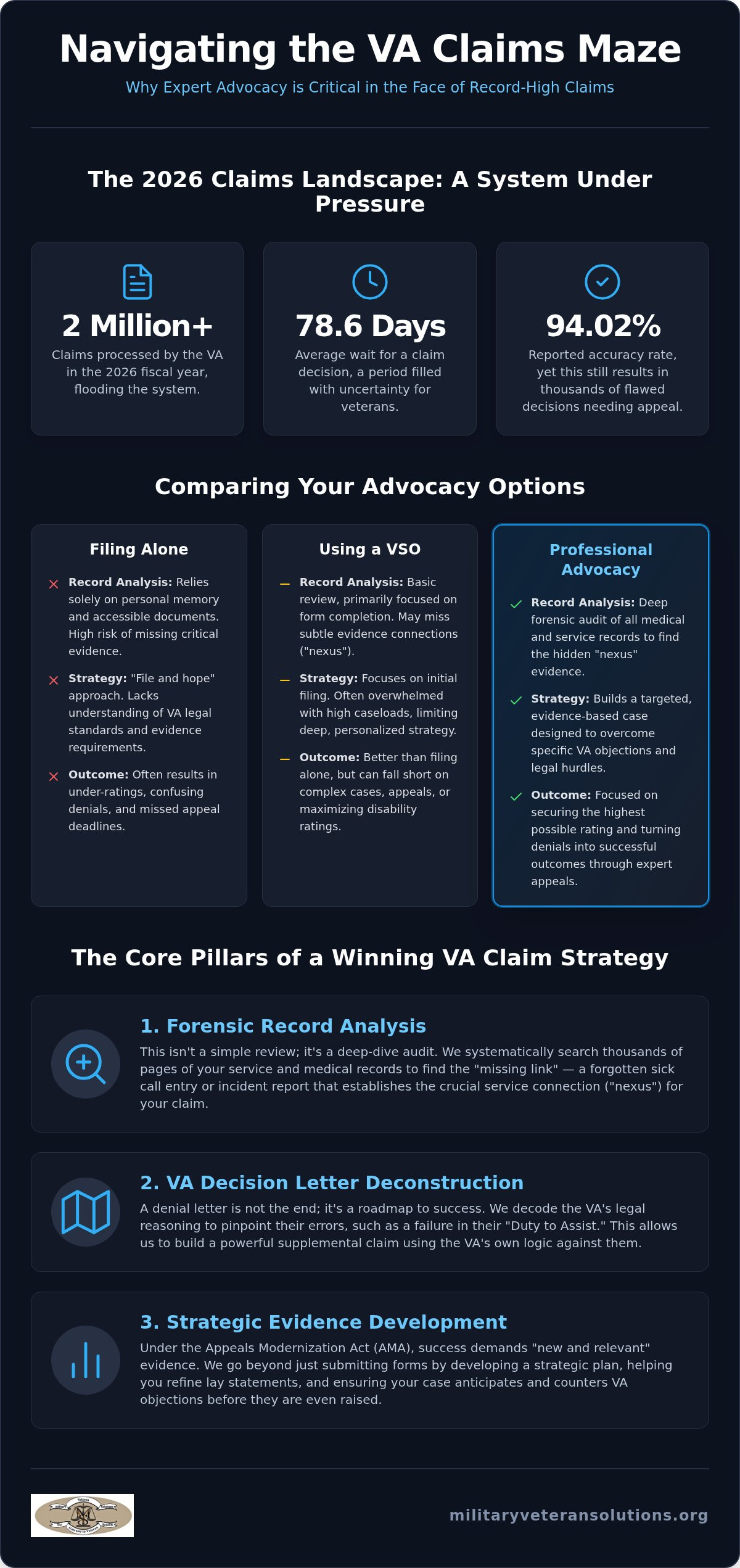
Veteran advocacy in 2026 isn't just about filling out forms. It's a high-stakes environment where the VA is processing record numbers of claims. With over 2 million claims processed already this fiscal year, the system is under incredible pressure. Professional veteran advocacy services have shifted from being a helpful option to a critical necessity for those who want to avoid the 78.6-day average wait only to receive an incorrect decision. Even with a 94.02% reported accuracy rate, thousands of veterans still receive flawed decisions that require professional correction.
The PACT Act continues to be the most significant driver of change in this field. It expanded eligibility for millions, but it also flooded the system with complex toxic exposure cases. While many conditions are now "presumptive," the VA still makes frequent errors in calculating ratings or determining the correct effective dates. You need an advocate who acts as a bridge between your medical evidence and the complex web of VA law, ensuring your service connection is established clearly and accurately.
It's vital to distinguish between different types of support. Many well-known American veterans' organizations focus on legislative advocacy, fighting for policy changes on Capitol Hill. Individual veteran advocacy services provide a different level of care. They offer a forensic, one-on-one deep dive into your specific military history and medical files. This veteran-to-veteran connection ensures that no detail of your service is overlooked during the evaluation process.
The Evolution of VA Claims Advocacy
The Appeals Modernization Act (AMA) fundamentally changed how you interact with the system. It provided lanes like Supplemental Claims and Higher-Level Reviews, but it also placed a higher burden of proof on the veteran to provide "new and relevant" evidence. "Filing and hoping" isn't a strategy that works in 2026. Success now requires a deliberate, evidence-based approach that anticipates VA objections before they happen. If you aren't leading with forensic evidence, you're likely falling behind in the backlog.
Why Veterans Seek Professional Representation
VA math is famously confusing. A 50% rating and a 30% rating don't simply add up to 80% in the VA's eyes. Trying to decode these rating schedules while living with service-connected disabilities is an immense emotional burden. Professional advocates specialize in finding "unseen" evidence hidden within thousands of pages of military records. They identify the forensic nexus that links your current health struggles to your service, turning a confusing pile of paperwork into a winning argument for the benefits you've earned.
The Core Pillars of Professional VA Claim Representation
Winning a VA appeal requires more than just submitting a claim; it requires a strategic, investigative approach. Professional veteran advocacy services provide the forensic expertise needed to bridge the gap between your service history and the VA's strict legal requirements. This process isn't about simply checking boxes. It's about building an airtight case that leaves the VA with no choice but to recognize the connection between your service and your current health.
Forensic Record Analysis vs. Simple Review
A simple review often skims the surface of your medical records, looking for obvious keywords. In contrast, forensic record analysis is the systematic search for service-connection markers. This deep-dive audit uncovers forgotten incidents, such as a single entry in a sick call log from twenty years ago, that can serve as the foundational "nexus" for your claim. Professional advocates, often familiar with the standards of the National Organization of Veterans' Advocates, understand that the evidence you need is frequently buried under thousands of pages of administrative data. They also help you refine "Lay Statements," ensuring your personal testimony provides the specific, credible details the VA requires to validate your daily struggles.
Analyzing VA Decision Letters for Hidden Opportunities
Receiving a denial is devastating, but it's often the most valuable piece of intelligence you have. Every decision letter contains a roadmap for your eventual success. Professional analysis decodes the VA's logic to identify "Duty to Assist" errors, where the rater failed to obtain necessary records or schedule a required exam. By using the VA’s own reasoning against them, advocates build supplemental claims that address the specific deficiencies cited in the denial. This targeted approach prevents "circular" denials, where a veteran repeatedly files the same evidence and receives the same rejection. If you are struggling to make sense of a recent denial, a professional VA decision letter analysis can reveal the path forward.
Beyond standard medical records, elite veteran advocacy services gather strategic evidence like buddy letters, employment records, and specialized medical opinions. They don't just file your appeal and wait. They represent you through every stage, from the initial Supplemental Claim to Higher-Level Reviews, ensuring every piece of evidence is presented at the optimal time. This relentless commitment to discovery is what separates a successful appeal from a missed opportunity. You've fought for your country; now, you need an advocate who will fight for the benefits you've rightfully earned.
Comparing Advocacy Options: VSOs, Attorneys, and Firms
Choosing the right representative for your appeal is just as critical as the medical evidence you provide. The 2026 VA landscape offers several paths, but each comes with different levels of attention and expertise. Whether you're filing a Supplemental Claim or pursuing a Higher-Level Review, you must decide which model of veteran advocacy services aligns with the complexity of your records and your desired outcome. It's about finding an ally who has the time and the technical knowledge to win your specific case.
The Pros and Cons of Free VSO Services
Veteran Service Officers (VSOs) are a cornerstone of the community. They offer free assistance and are often the right choice for straightforward initial claims. Organizations like the Wounded Warrior Project Advocacy team do incredible work at both the legislative and individual levels. However, VSOs are frequently overburdened by a massive volume of cases. When an appeal requires a deep, forensic dive into thousands of pages of military records to find a hidden nexus, a busy VSO may not have the capacity to provide that level of detail. Complex appeals often demand more dedicated hours than a non-profit representative can realistically spare.
VA Accredited Attorneys represent another option, though their strengths are often best utilized during Board of Veterans Appeals (BVA) litigation. If your case has reached the point of formal legal proceedings, an attorney's courtroom experience is invaluable. For many veterans, however, the "middle ground" of a professional advocacy firm provides the most balanced approach for Supplemental Claims and Higher-Level Reviews.
Professional Firms: Specialized Results-Driven Advocacy
Professional firms offer a specialized, results-driven model that prioritizes individual attention. A firm founded by a veteran, such as Military Veteran Solutions, brings a unique "Veteran-to-Veteran" perspective to record analysis. With over 25 years of experience, these firms focus on the forensic details that high-volume offices might overlook. The virtual consultation model has also revolutionized this space, allowing veterans to access elite advocacy from anywhere in the country without needing to visit a physical office. This same spirit of remote innovation is why many veteran entrepreneurs work with Amplify Yourself, LLC to source skilled virtual assistants from the Philippines for their business needs.
You should also understand the difference between accredited representation and the "Claims Coach" model. Many coaches are unaccredited and cannot legally represent you before the VA. In contrast, professional firms with accredited agents provide a secure, regulated path to your benefits. While these services involve a fee, it's typically based on a percentage of the back-pay you receive. This ensures your advocate is fully committed to securing every dollar of the compensation you earned through your service.
In addition to virtual business support, veteran entrepreneurs often require localized professional services to finalize important transactions. For those needing mobile assistance with financial paperwork, you can visit Sacramento Notary Co for expert help with business loan documents and other essential notarizations.
Selecting a representative for your appeal is a decision that will impact your financial security for years. You aren't just looking for someone to fill out a form; you're looking for a specialist who understands the nuances of the law. When vetting veteran advocacy services, you must be the one conducting the interview. You deserve an advocate who treats your file with the same intensity you gave your service. Elite veteran advocacy services always prioritize forensic evidence over empty promises.
Use this five-step evaluation process to ensure you're making the right choice:
- Verify accreditation: Confirm the individual or firm is accredited by the VA to ensure they meet federal standards.
- Ask about their audit process: Ensure they perform a deep forensic review of your military and medical records rather than a surface-level scan.
- Test communication: Evaluate their response times and the ease of their virtual accessibility.
- Check specific experience: Ask about their success in handling conditions similar to yours, particularly regarding PACT Act presumptives.
- Demand transparency: Understand the fee structure and contract terms before signing any representation agreement.
Red Flags in Veteran Advocacy
Beware of any firm promising "guaranteed" results or a "fast-track" to a 100% rating. The VA system is too unpredictable for such certainty. A major red flag is a firm that does not perform a thorough record audit before filing. Without a forensic review, they are simply guessing at your nexus. You should also watch for unaccredited "coaching" services. These entities cannot legally represent you before the VA. They often lack the regulatory oversight required to protect your sensitive data, which puts your claim and your privacy at risk.
The Importance of Virtual Accessibility
Your advocate does not need to be in your local city to be effective. Limiting yourself to local options often means missing out on national-level expertise. Virtual consultations allow you to work with specialists who have decades of experience regardless of where you live. This model utilizes secure digital environments to handle your Personally Identifiable Information (PII) with the highest level of care. You get elite advocacy without the need for travel or the limitations of local resources. If you're ready to work with a team that offers nationwide expertise, you can schedule your virtual consultation to begin your forensic record review.
The Military Veteran Solutions Difference: Advocacy Built on Service
Military Veteran Solutions, LLC is built on the foundation of direct service. Founded by a disabled veteran who served 10 years in the Army, our firm approaches veteran advocacy services with a perspective that high-volume administrative offices simply cannot match. We don't just process files; we understand the lived reality of military service and the long-term toll it takes on your physical and mental health. This shared background ensures that your case is handled with the gravity and respect it deserves, rather than being treated as just another administrative task.
Our "Virtual First" model ensures that every veteran has access to elite representation, regardless of where they are stationed or where they retire. By conducting virtual consultations across the United States, we focus our energy on forensic analysis and medical record discovery rather than maintaining unnecessary physical storefronts. This approach allows us to utilize over 25 years of specialized experience to benefit veterans in every state, providing a secure and convenient way to review sensitive data from the comfort of your own home.
Veteran-to-Veteran Representation
Shared experience provides a level of empathy that drives our professional rigor. We speak the language of the military and understand the nuances of service treatment records, sick call logs, and personnel files. This veteran-to-veteran connection is paired with a forensic investigative style that leaves no stone unturned in the search for your nexus. Our 25 years of experience translates into faster evidence discovery by allowing our team to pinpoint critical service-connection markers within thousands of pages of records with surgical precision.
Your Next Steps to Winning Your Appeal
To move from a denial to entitlement, you need to be prepared with a clear picture of your medical history. Start by organizing your most recent VA decision letters and any private medical records that support your current diagnosis. These documents form the basis of our initial forensic audit, helping us identify exactly where the VA's logic failed and where additional evidence is required to bridge the gap. Having these files ready for your initial consultation ensures we can move quickly to address appeal deadlines.
You shouldn't have to fight the system alone after already fighting for your country. Whether you're navigating a new PACT Act claim or a long-standing appeal, our team is ready to provide the specialized representation you deserve. Schedule your professional claim review with Military Veteran Solutions, LLC today and let us help you secure the benefits you've earned through your service.
Take Command of Your VA Appeal
Winning within the VA system in 2026 demands more than persistence; it requires a forensic strategy. You now understand that successful appeals hinge on finding the "nexus" within your military records and decoding the specific logic of your previous decision letters. While VSOs provide a vital service, the complexity of modern claims often necessitates the deep-dive expertise found in specialized veteran advocacy services. Don't leave your benefits to chance or settle for being a number in an impersonal backlog.
Military Veteran Solutions, LLC is a veteran-owned and operated firm with over 25 years of advocacy experience. We specialize in VA appeals, military record reviews, and decision letter analysis through nationwide virtual consultations, ensuring you receive elite representation regardless of your location. It's time to bridge the gap between your service history and the compensation you've rightfully earned. Your sacrifice deserves to be recognized with the highest possible rating.
Get the Professional VA Claim Representation You Deserve. You've fought the hard battles already; let us help you win this final one.
Frequently Asked Questions
What exactly does a veteran advocacy service do?
These services provide professional representation to help you secure the VA benefits you earned. This includes performing military record reviews to find service connection markers and conducting forensic analysis of your medical history. They act as your voice during the appeals process, ensuring your evidence meets the VA's strict legal requirements. By identifying the specific nexus between your service and current health, they turn complex files into a clear argument for a higher disability rating.
How is a professional advocacy firm different from a VSO?
While Veteran Service Officers (VSOs) offer free assistance and are excellent for initial claims, they are often overburdened by high case volumes. Professional veteran advocacy services provide a more personalized, results driven approach. Firms like Military Veteran Solutions dedicate more time to forensic record analysis and decision letter reviews. This specialized attention is often the difference maker in complex appeals where deep investigative work is required to overcome a previous denial.
Can a veteran advocate help if my claim was already denied?
Yes, advocates specialize in reversing denials through the Supplemental Claim or Higher Level Review lanes. They analyze your decision letter to identify Duty to Assist errors or evidentiary gaps the VA cited. Once they understand why the VA said no, they gather new and relevant evidence to address those specific concerns. Their goal is to break the cycle of circular denials by providing a forensic nexus that the VA cannot ignore during the evaluation.
Is it worth paying for veteran advocacy services?
Investing in professional representation is often worth it when you consider the potential increase in monthly compensation and back pay. Fees are typically a percentage of the retroactive benefits you receive, meaning your advocate is directly motivated to win your case. For veterans stuck at a low rating or facing repeated denials, the specialized expertise of veteran advocacy services can secure thousands of dollars in benefits that might otherwise be lost to the system.
How long does the VA appeal process take with an advocate?
While an advocate cannot change the VA's internal processing times, they can prevent unnecessary delays by ensuring your claim is fully developed before submission. As of May 2026, the average disability claim takes about 78.6 days to complete. An advocate ensures you don't waste months in the backlog by filing incomplete evidence or missing critical one year deadlines. Their forensic review gets the claim right the first time, reducing the need for multiple appeals.
What documents do I need for a military record review?
You should gather your DD-214, service treatment records, and any private medical files related to your conditions. If you have previous VA decision letters, those are essential for identifying why earlier claims failed. Advocates use these documents during a forensic record review to find specific markers of service connection. Having your complete claims folder is also highly beneficial for a thorough audit of your history and previous VA interactions, allowing for a more precise evaluation.
Can I get veteran advocacy help virtually if I don’t live near an office?
Absolutely. Virtual consultations allow you to access elite advocacy regardless of your physical location. Modern firms use secure digital platforms to review your records and communicate through every stage of the appeal. This Virtual First model ensures you aren't limited to local resources that may lack specialized forensic experience. You receive the same high level representation and personal attention from the comfort of your own home, anywhere in the country, with total security.
What is a VA decision letter analysis and why do I need it?
This analysis is a detailed audit of the VA's reasoning for a denial or a specific rating. It's the missing link in winning an appeal because it reveals exactly what the VA believes is lacking in your evidence. By decoding the rater's logic, an advocate can identify legal errors or missing medical links. This allows you to build a targeted supplemental claim that directly addresses the VA's objections rather than guessing at what they need for approval.


