
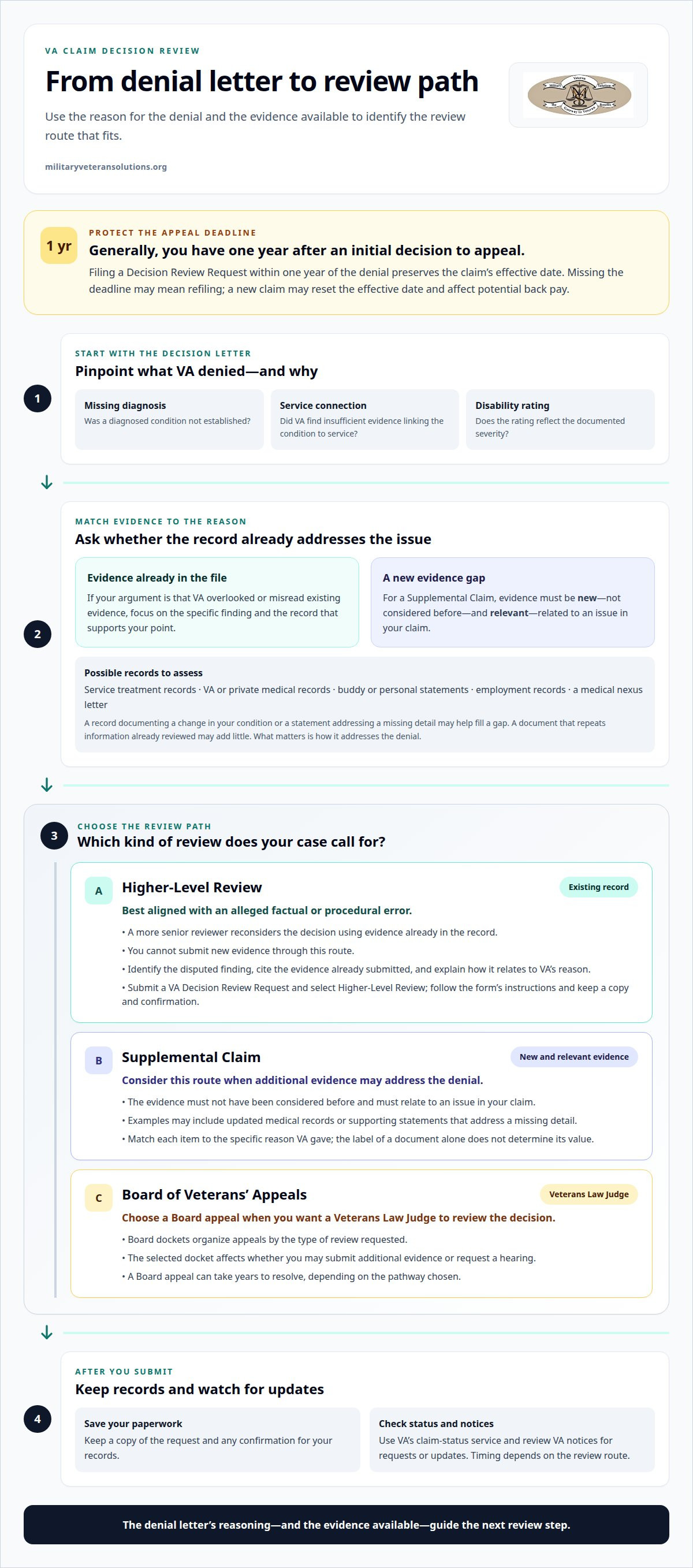
A VA denial is a decision point, not necessarily the end of your claim. Knowing what to do if VA denies your claim starts with reviewing the decision and acting within the applicable deadline: generally, you have one year following an initial decision to appeal, according to the U.S. Department of Veterans Affairs. Filing a Decision Review Request within one year of the denial preserves your claim’s effective date, according to the U.S. Department of Veterans Affairs.
A VA denial can leave you frustrated and unsure which route to take. The right next step depends on why VA denied the claim, whether you have new and relevant evidence, and whether you believe the decision contains an error that can be reviewed using the existing record.
This guide compares the main options: request a Higher-Level Review, file a Supplemental Claim with new and relevant evidence, or appeal to the Board of Veterans’ Appeals. You’ll also learn how to assess the denial letter, organize evidence, and consider representation, including support from a Veterans Service Organization representative, an accredited claims agent, or an attorney. The goal is to help you see the available paths and make a more informed decision about how to move forward.
Key Takeaways
- Start by identifying the specific reason for the denial; it helps determine which review path fits your case.
- Consider a Higher-Level Review when you believe VA made an error and you aren’t submitting new evidence.
- A Supplemental Claim may be appropriate when you can provide new and relevant evidence, such as updated medical records or supporting statements.
- Missing records, incomplete forms, or a missed Compensation and Pension exam can affect a claim, so look for these issues in the decision and file.
- VA-accredited attorneys, claims agents, and Veterans Service Organization representatives can help with decision reviews; understand how each type of representation fits your needs.
1. Can any type of evidence reopen my VA claim?
Not every document will help address a denial. For a Supplemental Claim, evidence must be new and relevant: it wasn’t considered before and relates to an issue in your claim. A private medical record repeating symptoms already reviewed may add little. A treatment record documenting a change in your condition, or a statement addressing a missing detail, may help fill an evidence gap.
Start with the VA decision letter. Identify which part of the claim VA denied and why, such as a missing diagnosis, insufficient evidence connecting the condition to military service, or a rating that doesn’t reflect the documented severity. Then match potential records to that reason. Evidence might include service treatment records, VA or private medical records, buddy statements, personal statements, employment records, or a medical nexus letter. What matters is how the evidence addresses the denial, not its label.
Protect the appeal deadline while gathering records. A veteran generally has 1 year after an initial VA decision to appeal; missing the deadline may require refiling the claim, according to the U.S. Department of Veterans Affairs. Filing a Decision Review Request within one year of a VA denial preserves the claim’s effective date, according to the U.S. Department of Veterans Affairs. If you miss the deadline, a new claim may reset the effective date, affecting potential back pay.
Choose a review path that fits the evidence. A Higher-Level Review addresses an alleged error using the existing record, so you can’t submit new evidence through this route. A Supplemental Claim is appropriate when new and relevant evidence may address the denial. A Board of Veterans’ Appeals appeal asks a Veterans Law Judge to review the decision. Read the letter closely before choosing, because each route serves a different purpose.
The Board’s dockets organize appeals by the type of review requested. Your selected docket affects how the Board considers the case and whether you may submit additional evidence or request a hearing. A Board appeal can take years to resolve, depending on the pathway chosen. Before selecting a docket, consider what the record needs and what kind of review you’re seeking.
How long do VA decision reviews take, and how can I check their status? Timing depends on the review route; Board appeals can take years, depending on the pathway. Check your request through VA’s claim-status service and review VA notices for requests or updates.
If VA denies a reopened claim, you may seek another review through an appropriate administrative route or appeal to the Board of Veterans’ Appeals. First, revisit the new decision’s reasons. If it identifies an unresolved evidence gap, address it; if it points to a possible review error, consider a route suited to that issue. The denial letter shows what your next appeal needs to address.
2. Higher-Level Review
A Higher-Level Review asks VA to reconsider a decision using the evidence already in the record. It may fit if you believe the denial resulted from a factual or procedural error, rather than missing evidence. You can’t submit new evidence through this review route. If your argument depends on records VA hasn’t considered, a Supplemental Claim may be a better next step.
Begin with the decision letter. Find VA’s reasons for denying each condition, then compare them with the evidence and findings discussed in the letter. For example, VA may acknowledge a diagnosis but explain that the record doesn’t establish a connection to service. That is a different dispute from a decision that overlooks a relevant service record or misstates what the evidence says.
Identify the specific error you want reviewed. A procedural concern might be that VA failed to address evidence already in the file or didn’t explain how it reached a finding. A disagreement with the outcome alone gives the reviewer less to assess than a clear argument tied to a specific part of the denial. Identify the disputed finding, cite the evidence already submitted, and explain how it relates to VA’s stated reason.
To request this review, submit a VA Decision Review Request and select Higher-Level Review. Include the decision details and identify the issue you want reviewed, following the form’s instructions. The form to use is the Decision Review Request for Higher-Level Review, not a Supplemental Claim request. Keep a copy of your request and any confirmation for your records.
How do you choose between review options? Choose Higher-Level Review when the existing record supports your argument that VA made an error. Choose a Supplemental Claim when new and relevant evidence could address the denial. Consider a Board appeal if you want a Veterans Law Judge to review the decision. The decision letter’s reasoning and the evidence available are central to your choice.
A reviewer can assess whether VA correctly considered the record and reached its decision. Keep your argument focused: connect each alleged error to the denial’s wording and the existing evidence. Don’t rely on documents you intend to add later, because this route doesn’t accept new evidence. If a key medical record or supporting statement is missing, consider whether another review option would allow you to submit it.
If the letter’s explanation is difficult to follow, a structured review of the VA decision letter can help clarify the stated reasons and the issues you may want to raise. Keep the review request centered on those issues, rather than repeating the full history of your claim.
3. Supplemental Claims with new and relevant evidence
A Supplemental Claim gives VA new information to consider after a denial. According to the U.S. Department of Veterans Affairs, you can file one when you have new and relevant evidence VA didn’t have during its earlier review. “New” means it wasn’t previously part of the record; “relevant” means it relates to an issue in your claim. A document that doesn’t address the reason for denial may not fill the gap.
Use the denial letter to identify the evidence gap before gathering more records. If VA found that the record didn’t establish a current disability, updated diagnostic or treatment records may address that finding. If VA acknowledged your condition but found no link to service, evidence explaining how the condition relates to your military service may be more relevant. Match each item to a specific reason in the letter.
Medical evidence can support different parts of a disability claim. A diagnosis documents a current condition, while medical evidence discussing its relationship to service may help address service connection. A medical nexus letter may explain that relationship. The key question isn’t simply whether a document is medical, but whether it addresses an issue VA identified in its decision.
A higher disability rating requires evidence that addresses the condition’s severity under the applicable rating criteria. If symptoms have worsened, ongoing treatment records can help show their progression. Ask that worsening symptoms be clearly documented by a medical professional. A record describing increased limitations over time may be more useful for a rating request than evidence that only repeats an unchanged diagnosis.
Prepare a clear submission instead of sending unrelated records. For each new item, identify the denial reason it addresses and explain what the evidence adds. For example, if VA says the record doesn’t establish service connection, identify the new medical opinion that addresses the link. If the issue is severity, point to records documenting changes in symptoms or treatment. Tie your explanation to the condition and issue under review.
Private medical records need particular attention. VA doesn’t automatically have access to your private medical records and must request them. Identify the relevant provider and records, then follow the claim instructions for authorizing or submitting them. Don’t assume a private appointment or treatment record is already in VA’s file. Evidence VA hasn’t received can’t inform its review.
Before submitting, compare the new evidence with the decision letter and make sure each item supports a specific issue. A Supplemental Claim is for evidence that adds relevant information, not simply another opportunity to restate your original argument. If the denial concerns several conditions, connect each supporting record to the correct condition so VA can assess the issues in context.
4. Should You Hire a VA Disability Attorney?
An attorney may help when a VA disability claim involves complicated evidence, procedural issues, or repeated denials. Representation isn’t limited to attorneys: veterans may also work with accredited claims agents or Veterans Service Organization representatives. Focus on what the denial requires next. A clear missing-record issue may call for gathering evidence, while an argument that VA overlooked evidence already submitted may call for review of the decision.
Common reasons for a VA denial include an incomplete form, missing records, or a filing mistake. These issues can delay a disability claim or affect its outcome. Another frequent problem is insufficient evidence connecting a diagnosed condition to military service. Read the VA decision and match each stated reason to the part of the record it discusses. This helps distinguish missing evidence from a process error or disagreement with VA’s conclusion.
If VA denied your claim because service records are missing, identify which records could address the denial and choose a review option that allows relevant new evidence. If VA denied the claim after you missed a Compensation and Pension exam, explain the circumstances and address the examination issue in your next submission. A missed exam can leave VA without enough information to evaluate the disability.
An attorney may be useful when the decision raises complex questions about how VA weighed evidence or handled the process. For example, the letter may refer to service records but omit discussion of a relevant document in the file. A representative can help organize the issue, connect it to the record, and prepare a focused review request. Bring the decision letter and relevant claim documents to the discussion.
Consider the review route when deciding what representation you need. A Higher-Level Review relies on the existing record and doesn’t accept new evidence. A Supplemental Claim allows new and relevant evidence. A Board appeal asks a Veterans Law Judge to review the decision. An accredited attorney, claims agent, or Veterans Service Organization representative can help with a decision review request, but the best fit depends on the denial’s reasons and the evidence available.
Representation can be especially helpful when your file includes multiple conditions, conflicting medical opinions, or decisions with different explanations. Ask the representative to explain the disputed issue, the evidence supporting your position, and the review option being pursued. Clear answers help you understand the strategy without relying on a broad promise about the result.
You don’t necessarily need an attorney for every VA disability denial. A focused error supported by a clear record may be manageable without one; a complicated VA decision may benefit from experienced representation. Choose based on the work involved, the evidence gap, and whether you need help interpreting the decision or presenting an appeal.
5. Veterans Service Organizations and legal representation
A Veterans Service Organization (VSO) representative, an accredited claims agent, or an accredited attorney can help you request a VA decision review. Their support can help you understand the denial, identify the disputed issue, and prepare a focused request. The right kind of assistance depends on what’s missing from your file and what the VA decision says.
A VSO representative may help you understand the review process and organize information about your military service and claim. For example, if VA’s decision refers to a service record that wasn’t considered, representation can help focus attention on that missing evidence and the review option that can address it. A representative can also help connect the reason for denial to the evidence relevant to your appeal.
An accredited claims agent can assist with a VA benefits claim and decision review. An attorney may be helpful when the issues involve complex evidence, procedural concerns, or difficult questions about how VA reached its decision. These roles aren’t interchangeable in every case, so identify the specific task you need help with: interpreting the decision, organizing records, or presenting an argument about an alleged error.
Before working with a representative, clarify their proposed role. Ask how they would address the denial’s stated reasons, what documents they need to understand your file, and which review path they recommend. For instance, a Higher-Level Review relies on the existing record, while a Supplemental Claim is intended for new and relevant evidence. Their explanation should connect the recommended path to your case.
Representation can also help organize a file with several conditions or missing military records. A service treatment record may relate to one condition, while a medical opinion may address another. Tying evidence and arguments to the correct issue helps make the requested review easier to follow. The VA decision letter remains the starting point for identifying those issues.
Representation isn’t necessary for every denial. If the decision identifies a clear missing document and you understand which review option can accept it, you may be able to prepare the next request yourself. If you’re unsure how the record supports service connection or compensation, or the decision raises several distinct issues, assistance can help you present a more organized response.
Choose support based on the work your appeal requires, not on a promise of a particular outcome. A useful discussion should identify the denial reason, the evidence already in the file, and the next action being considered. If you want help thinking through those appeal steps, discuss your VA appeal options.
Military Veteran Solutions: Veteran Claims Representation
Military Veteran Solutions helps veterans assess a VA denial and consider the next step through Veteran Claims Representation. When the decision’s reasoning is unclear or military records may affect the claim, VA Decision Letter Analysis and Military Record Reviews can help clarify the issues. If an appeal is appropriate, the firm also assists with filing VA appeals.
This support may help when you’re weighing a Higher-Level Review against a Supplemental Claim, or when the record needs a closer look before you proceed. The focus is on understanding the decision, identifying relevant records, and determining how to move forward with your claim.
If you’d like support reviewing your VA denial and appeal options, contact Military Veteran Solutions.
Move Forward With a Clear Appeal Strategy
A denial can make the next step feel uncertain, especially when the decision leaves important questions unanswered. Before moving forward, focus on the issue that matters most: what part of the decision do you want reviewed, and what information or argument supports that request? A clear answer can help you approach the next stage with purpose instead of reacting to the denial as a whole.
If you’re weighing what to do if VA denies your claim, make your next move deliberate. Keep your decision letter and claim records together, note the concerns you want addressed, and consider whether support would help you prepare an appeal. The goal is a focused path that reflects your circumstances and the evidence in your file.
Military Veteran Solutions can help you consider your next steps. Contact Military Veteran Solutions today to discuss support for your VA claim. You can move forward thoughtfully, one clear decision at a time.
Frequently Asked Questions
VA Denied My Claim, Now What?
If you’re deciding what to do if VA denies your claim, begin by identifying which condition or issue the decision denied. Then note the decision date and VA’s stated reason. This helps you focus your next step instead of treating the whole claim as one dispute. Keep the decision letter and related notices together so you can refer to the same records when preparing a review request.
Can any type of evidence reopen my VA claim?
No. Evidence needs to add information VA didn’t previously consider and relate to the issue under review. For example, a newly located service record about an event connected to a claimed condition may address a different gap than an updated report about current symptoms. Before relying on a document, consider what point it supports and whether that point matches the reason VA denied the claim.
Does reopening guarantee back pay?
No. Filing a Supplemental Claim or reopening a claim doesn’t guarantee that VA will grant benefits or award back pay. The effective date can matter: according to the U.S. Department of Veterans Affairs, filing a Decision Review Request within one year of a denial preserves the claim’s effective date. Any benefits and potential back pay depend on VA’s decision and the effective date that applies to the claim.
Should You Hire a VA Disability Attorney?
An attorney may be useful when your case involves difficult evidence or a complex disagreement with VA’s decision, but an attorney isn’t the only representation option. Veterans may also work with an accredited claims agent or a Veterans Service Organization representative. Consider what assistance you need: interpreting the decision, organizing records, or presenting an argument. Ask how the proposed support addresses your specific issue, rather than relying on a general promise.
What Counts as “New and Relevant” Evidence?
New and relevant evidence is information VA didn’t consider before that relates to an issue in your claim. A statement from someone who witnessed an event during service could add relevant information if VA questioned whether the event occurred. A medical record may add context about a diagnosed condition. Evidence should address a point that matters to the decision, rather than simply repeat information already in the file.
What are the deadlines to appeal a VA disability claim denial?
A veteran generally has one year after an initial VA decision to appeal, according to the U.S. Department of Veterans Affairs. Filing a Decision Review Request within one year of a denial preserves the claim’s effective date, according to the department. Missing the deadline may require starting a new claim, and the effective date may reset. Use the date on the decision notice to assess your timeline promptly.
What are the three VA decision review options: supplemental claim, higher-level review, and Board appeal?
A Supplemental Claim is for new and relevant evidence VA didn’t previously consider. A Higher-Level Review asks VA to review the existing record and doesn’t accept new evidence. A Board appeal asks the Board of Veterans’ Appeals to review the decision. Choose based on whether you have additional evidence, believe the existing decision contains an error, or want a Veterans Law Judge to review it.
What new and relevant evidence can support a supplemental claim?
Potential evidence includes service treatment records, private or VA medical records, buddy statements, personal statements, employment records, and medical nexus letters. Choose material that addresses the disputed issue. For instance, a treatment record may document a condition’s progression, while a witness statement may describe an event during service. Clearly connect each item to the issue so VA can understand why it belongs in the claim.