
What if the hardest part of a nerve damage claim isn’t describing the pain, numbness, or weakness, but showing how it connects to your service and affects daily life? With VA disability for nerve damage, a diagnosis matters, but the VA also considers which nerve is affected, the severity of symptoms, and the resulting loss of function.
If you’re unsure whether your symptoms fit a compensable condition, or how to connect them to military service or another service-connected disability, you’re not alone. The evidence needs to make the relationship clear. Medical records, examination findings, service history, and specific examples of difficulty walking, balancing, or gripping can help explain the full impact.
This guide explains how the VA evaluates nerve conditions, what evidence may support direct or secondary service connection, and how functional limitations can shape an evaluation. You’ll also learn how to organize your records and review a decision letter if you need to understand what the evidence shows or what questions remain.
Key Takeaways
- VA disability for nerve damage depends on the affected nerve and how the condition limits function, not just the name of a diagnosis.
- Learn how paralysis, neuritis, and neuralgia describe different nerve-related problems and why the distinction can matter during evaluation.
- Consider whether your claim may connect directly to service or relate secondarily to another diagnosed condition.
- Organize service records, medical records, and VA decisions by their role so potential gaps in the claim are easier to spot.
- MVS reviews records and decision letters and provides representation and advocacy for claims, including denied claims.
VA Disability for Nerve Damage: What the Claim Involves
Pain, tingling, numbness, or weakness can be difficult to explain, especially when symptoms come and go or affect different parts of your body. A useful starting point is to separate what you experience from what medical evidence identifies and connects to service. Your symptoms are important, but the claim also needs evidence of a current condition and its relationship to service or a service-connected disability.
“Nerve symptoms describe what you feel or what your body can’t do; a supported claim also needs evidence identifying a current condition and explaining its relationship to military service or a service-connected disability.” Symptoms alone don’t establish a diagnosis or its cause. A clinician’s assessment and relevant records can help clarify the condition and the findings. For general background on neuropathy, including its forms and possible symptoms, see Neuropathy.
How nerve damage can affect sensation, movement, and body functions
Nerves carry signals between the brain, spinal cord, and the rest of the body. When a nerve is affected, changes may involve sensation, movement, or automatic body functions. The pattern depends on which nerves are involved and the underlying condition. Examples can include:
- Sensory changes: numbness, tingling, burning or sharp pain, or an altered response to touch, heat, or cold.
- Motor changes: weakness, reduced coordination, or difficulty moving a limb or gripping an object.
- Autonomic changes: possible effects on functions such as sweating, digestion, or blood pressure, which the body regulates largely without conscious effort.
These examples aren’t a checklist for self-diagnosis. Similar symptoms can have different causes, and experiencing one doesn’t prove nerve damage. A medical evaluation helps distinguish a nerve condition from other explanations and document the affected area and findings.
Why symptoms and functional effects both matter
For VA disability for nerve damage, describing symptoms clearly is more useful than relying on a broad label alone. Explain where symptoms occur, how often they happen, how long they last, and whether they change over time. Then describe what they interfere with. For example, note whether hand numbness makes handling tools harder, or whether leg weakness affects stairs, balance, or walking.
Be specific and factual. A brief record can help you capture details that are easy to forget between appointments:
- Note the body area and whether symptoms affect one side or both.
- Describe the sensation or movement change in everyday language.
- Record how symptoms affect work tasks, household activities, sleep, or mobility.
- Keep relevant appointment notes and tell your clinician about changes or limitations.
A diagnosis alone doesn’t establish that military service caused or contributed to the condition. The claim also needs evidence supporting that connection, whether directly to service or through another service-connected disability. The VA evaluates the record as a whole, so don’t assume that a symptom description predicts a particular decision. Clear details give the evidence a fuller account of what you experience and how it affects daily life.
How the VA Evaluates Nerve Damage and Functional Severity
The VA doesn’t evaluate every nerve condition the same way. The assessment depends on the specific nerve involved, the medical evidence describing its effects, and how those effects limit function. A diagnosis or a single symptom doesn’t tell the whole story. The record should explain both the nerve-related condition and what it means for your daily capabilities.
In a nerve claim, the affected nerve helps frame the evaluation, while documented symptoms and functional loss show how the condition affects you. That connection is central to understanding how VA disability for nerve damage is assessed.
What paralysis, neuritis, and neuralgia mean in VA evaluations
The VA schedule uses terms that can sound more severe or technical than they are in everyday conversation. In this context, “paralysis” can refer to impaired nerve function, including incomplete impairment, not only a total inability to move. “Neuritis” describes nerve inflammation or irritation associated with findings such as sensory disturbance, reduced reflexes, muscle atrophy, or pain. “Neuralgia” generally describes pain along the course of a nerve.
These categories aren’t interchangeable labels for any tingling or pain. The VA applies them through the neurological rating schedule in 38 CFR § 4.124a. A Federal Register document discusses proposed revisions to neurological rating criteria. It is a proposal, not a substitute for the schedule currently in effect. You can review the VA Schedule for Rating Disabilities: Neurological Conditions proposal for context.
How symptoms connect to functional impairment
The schedule considers the affected nerve and the degree of functional impairment. In practical terms, the evidence may describe whether sensory changes, pain, or weakness interfere with ordinary movements and tasks. Severity is assessed from the full picture, not from one symptom in isolation. Similar complaints can have different significance depending on the nerve involved and the documented findings.
Connect each reported symptom to an observable effect where you can. For example, explain whether numbness makes it harder to feel objects in your hand, or whether weakness affects standing, walking, or lifting. These examples don’t establish a diagnosis or predict a rating. They show the kind of detail that can make the record easier to understand.
- Describe the symptom: Note its location, character, and whether it comes and goes or persists.
- Explain the limitation: Identify the task or movement affected and what happens when you try it.
- Keep the account consistent: Make sure your descriptions of daily effects are clear and correspond with relevant medical documentation.
If the decision or evidence is difficult to interpret, a focused review can help you understand what the record says and where questions remain. MVS reviews medical records and VA decisions and provides veteran claims representation. Learn more about support reviewing your VA claim.
Which Nerve Conditions and Claim Relationships Should Veterans Consider?
Similar symptoms don’t always point to the same nerve condition or claim path. Numbness, pain, or weakness may involve peripheral nerves, a nerve root near the spine, or another diagnosed condition. For a VA disability for nerve damage claim, identifying what the medical evidence describes can help show which relationship to service the records need to address.
Peripheral nerve damage, radiculopathy, and other nerve-related conditions
Peripheral neuropathy involves damage or dysfunction in peripheral nerves, often causing symptoms in the hands or feet. Radiculopathy involves a nerve root near the spine and may cause pain, tingling, numbness, or weakness that travels into an arm or leg. These patterns can overlap, and symptoms alone can’t establish which condition you have. Medical records and a clinician’s diagnosis help identify the condition and its location.
Compare how the diagnosis is described in treatment notes, test results, and prior VA records. For example, one record might describe foot tingling as peripheral neuropathy, while another discusses symptoms associated with a spinal condition. That distinction matters because the claim should identify the condition supported by the evidence, rather than rely on a general phrase such as “nerve pain.” Don’t assume that one diagnosis rules out another. Focus on what your records document.
Direct and secondary service connection for nerve damage
A direct claim asks whether the current nerve condition is connected to an event, injury, or illness during military service. The evidence may include service records describing the event and medical records documenting the condition and its history. A secondary claim asks whether a condition is related to another disability that is already service-connected. The relationship needs support in the evidence. It isn’t established simply because both conditions exist.
For instance, if a veteran has a service-connected back condition and later receives a radiculopathy diagnosis, the records may raise the question of whether the nerve condition is related to that back disability. The diagnosis alone doesn’t answer it. Relevant medical findings and an explanation of the relationship can help clarify the basis for the claim. Similarly, if nerve symptoms arise after treatment for another condition, the records may be relevant to a possible secondary relationship.
Exposure-related circumstances may raise separate questions about how a nerve condition is connected to service. If your situation involves a condition or treatment related to toxic exposure, the evidence and applicable rules need to be considered in context. MVS’s guide to PACT Act claims and appeals provides related background, but it isn’t a substitute for evaluating your specific records.
As you review your file, write down the diagnosed condition, the proposed connection to service or another service-connected disability, and the records that support each part. This outline can help reveal whether the claim tells a coherent story or whether a link needs clearer documentation.
How to Organize Evidence for a VA Nerve Damage Claim
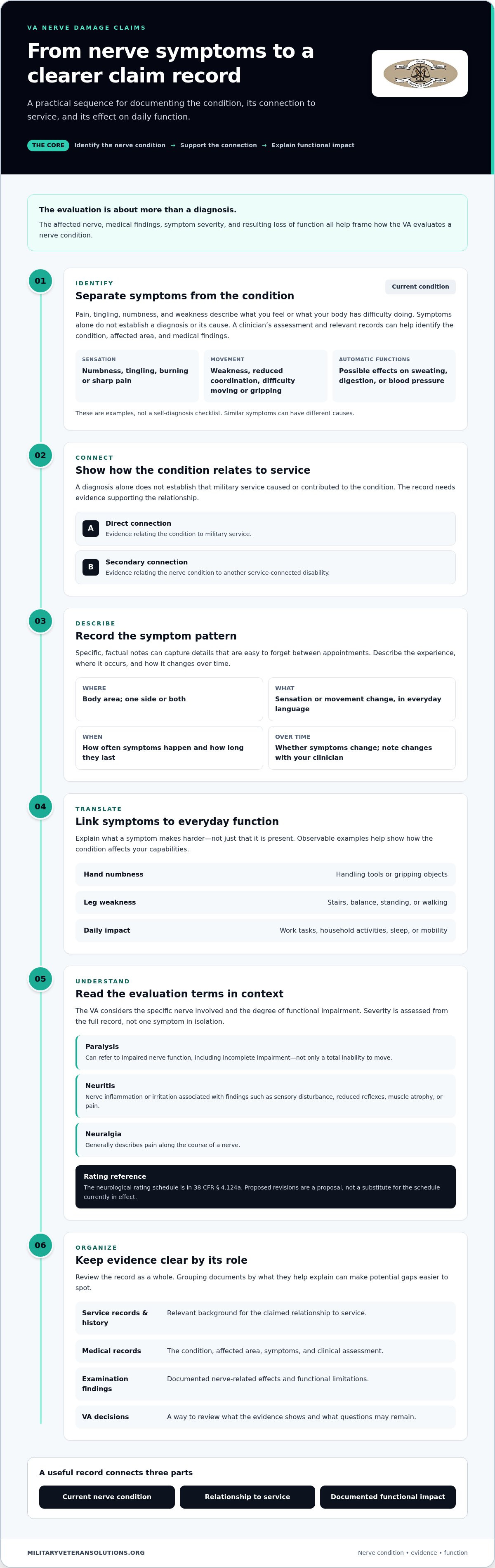
A well-organized file makes it easier to follow the claim: what condition you’re claiming, what happened during or after service, and how the condition affects you now. For VA disability for nerve damage, focus on connecting the records rather than collecting paperwork without a clear purpose. Use this sequence to build a coherent evidence picture.
- Name the condition. Use the diagnosis reflected in your medical records when identifying the nerve condition. If records use different terms, note the differences instead of trying to resolve them yourself.
- Sort records by role. Keep service records, VA decisions, and current medical records in separate groups. Each helps answer a different question.
- Build a timeline. Note relevant events, symptom onset, changes, and treatment using information you can support.
- Describe daily effects. Record how symptoms affect practical tasks, using clear and consistent language.
- Review for gaps. Look for missing records, unclear dates, or details that appear inconsistent, and identify questions for further review.
Build a clear timeline from service history to current symptoms
Service records can document an injury, illness, or other relevant event during military service. Current medical records can show a diagnosis, reported symptoms, examinations, and treatment. Put the available information in date order, but don’t fill gaps with guesses. If you remember symptoms beginning before they appear in a record, distinguish your recollection from the documented date.
Mark changes that may help explain the history, such as symptoms spreading to another area or treatment changing over time. If two records describe onset or location differently, flag the discrepancy for careful review rather than choosing one account without explanation. MVS reviews military records to help veterans assess the service documentation in their claims.
Prepare medical evidence and describe day-to-day effects
Gather current medical records related to the diagnosis, symptoms, examination findings, and treatment. Include relevant notes from different providers if they help show how the condition has been assessed over time. VA decision letters also matter if the condition has been considered before. They show what the VA decided and may identify evidence or reasoning that needs closer attention.
Your own symptom notes can add practical context, but keep them specific and factual. Describe where symptoms occur, how they affect movement or sensation, and what activities become difficult. For example, explain what happens when you try to grip, walk, or stand, rather than relying only on a broad statement that the condition is severe. Use your own words and keep descriptions consistent with what you report during medical appointments.
A medical examination or a larger file does not guarantee a particular VA decision. The aim is to make the evidence easier to understand and identify what it does and doesn’t establish. MVS reviews military records, medical records, and VA decisions for nerve claims. You can request a VA claim review.
How MVS Can Help Veterans Review a Nerve Damage Claim
Putting together a nerve damage claim can leave you with a stack of records and an important question: do they clearly show what condition you have, how it relates to service, and how it affects you? Military Veteran Solutions (MVS) reviews military records, current medical records, and VA decision letters to help veterans understand the evidence in their files. MVS provides advocacy and representation for veterans filing claims and seeking assistance with denied claims. A review can clarify the record, but it can’t guarantee a VA decision or a particular result.
What a focused claim review can help clarify
For VA disability for nerve damage, the details across records matter. Service documents may help establish relevant events or history. Medical records can describe diagnoses, symptoms, and treatment. A VA decision letter explains the VA’s stated findings and reasoning. Reviewing these together can help identify what the file supports, where records differ, and what questions may need attention.
Decision-letter analysis is especially useful when the explanation feels hard to follow. It can help you understand which evidence the VA discussed and how the decision addressed the claim. A review doesn’t predict an approval, rating, or back pay. It gives you a clearer basis for considering your next step, including whether additional advocacy or an appeal may be appropriate.
- Military records: Review relevant service history and documentation.
- Current medical records: Examine how the condition and its effects are documented.
- VA decision letters: Understand the reasons stated for a prior decision.
Get support through virtual consultation and veteran advocacy
MVS provides virtual consultations by live video, which you can join using a smartphone, tablet, or computer. The firm is locally owned and not tied to any government entity. Its founder is a disabled veteran who served ten years in the U.S. Army, and MVS has over two decades in business and 25 years of experience in veteran advocacy.
Bring the records you have and the questions you want answered. A focused conversation can help you discuss your claim history, understand representation, and identify a practical next step without assuming what the VA will decide. MVS offers a free initial consultation, giving you an opportunity to discuss support for a nerve damage claim.
Request your free initial consultation
Take the Next Step With a Clear Plan
Your next move doesn’t have to answer every question about your claim. Start by identifying what you want clarified, such as whether the evidence connects your condition to service or what a VA decision says about the record. A focused conversation can help you consider the path ahead without assuming what the VA will decide.
For VA disability for nerve damage, a clear, evidence-supported account can keep your claim grounded in your documented history and present limitations. If you’re unsure how to proceed, MVS offers a free initial consultation and virtual consultations so you can discuss your situation and possible support. The founder’s military service also informs the firm’s veteran-focused advocacy.
Discuss your nerve damage claim with MVS. One informed next step can make a complicated process feel more manageable. You deserve the chance to understand your options and move forward with confidence.
Frequently Asked Questions
Can nerve damage qualify for VA disability if symptoms began after military service?
Yes, symptoms that begin after discharge can still be part of a VA claim, but the timing alone doesn’t establish service connection. The evidence needs to identify a current nerve condition and support how it relates to service or to another service-connected disability. A later diagnosis may be informed by treatment history, reported onset, and a medical explanation. Record when symptoms first appeared and how they changed, without guessing dates.
Does a nerve damage diagnosis automatically establish service connection?
No. A diagnosis can help establish that you have a current condition, but it doesn’t by itself show why the condition developed or how it connects to service. The claim also needs evidence supporting that relationship. For example, a clinician’s explanation may address how an in-service injury relates to the diagnosed condition. The VA considers the evidence in the claim, so a diagnosis alone doesn’t determine the outcome.
Can nerve damage be claimed as secondary to another service-connected condition?
Yes. A veteran may claim nerve damage as secondary when evidence supports a relationship to an existing service-connected condition. For example, records might raise a question about neuropathy connected to service-connected diabetes or radiculopathy related to a service-connected back condition. These examples don’t establish eligibility by themselves. The medical evidence should identify the nerve condition and explain the relationship, including whether the service-connected condition caused or worsened it.
What evidence can help support a VA claim for nerve damage?
Evidence may include a medical diagnosis, examination findings, treatment records, and documentation that helps connect the condition to service or another service-connected disability. Your own statement can add context about when symptoms started and how they affect daily activities. Statements from people who observed changes may also help describe what they personally noticed. Keep accounts factual and consistent, and distinguish your recollection from details recorded by a clinician.
How does the VA distinguish mild nerve symptoms from more serious functional impairment?
The evaluation considers the specific nerve involved, medical findings, and the degree of functional impairment, rather than treating one symptom as decisive. Intermittent sensory changes may present differently from documented weakness, muscle loss, or reduced reflexes. The record should describe what you can and can’t do, such as whether weakness affects lifting or walking. These examples illustrate relevant functional evidence, but they don’t predict a particular evaluation.
Can a veteran file a nerve damage claim if service records do not mention the condition?
Yes. An absence of a nerve diagnosis in service records doesn’t automatically prevent a claim, though it may leave the connection to service less clear. Other evidence might include later treatment records, your account of symptom history, or statements from people who observed relevant events or changes. Explain any gap honestly. Don’t present a later recollection as if it were a contemporaneous service record.
What should I do if the VA decision does not address my nerve symptoms?
Read the decision letter closely and compare its reasoning with the symptoms and records submitted. Check whether the nerve condition was identified, whether relevant evidence was discussed, and whether the decision explains what was accepted or not established. Keep the letter and note specific omissions or concerns. Review options depend on the decision and claim history, so follow the letter’s instructions and seek informed support promptly if you need help assessing it.